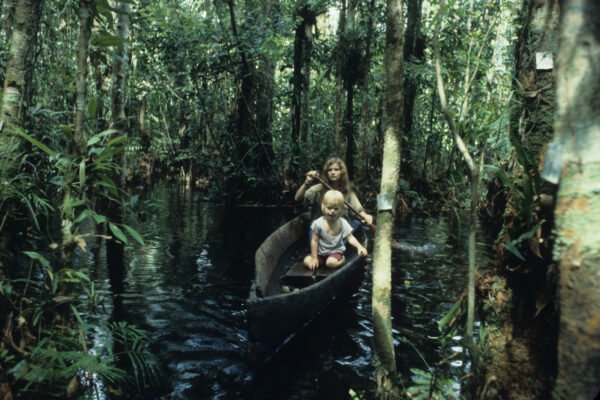
In 2017, we returned to the rainforests of Kalimantan to search for an orangutan I had known since childhood. Princess was already believed to be gone by then. Nobody had seen her for several months, and there was concern that she might have fallen ill. Our search became part of the Animal Planet documentary Raised Human.
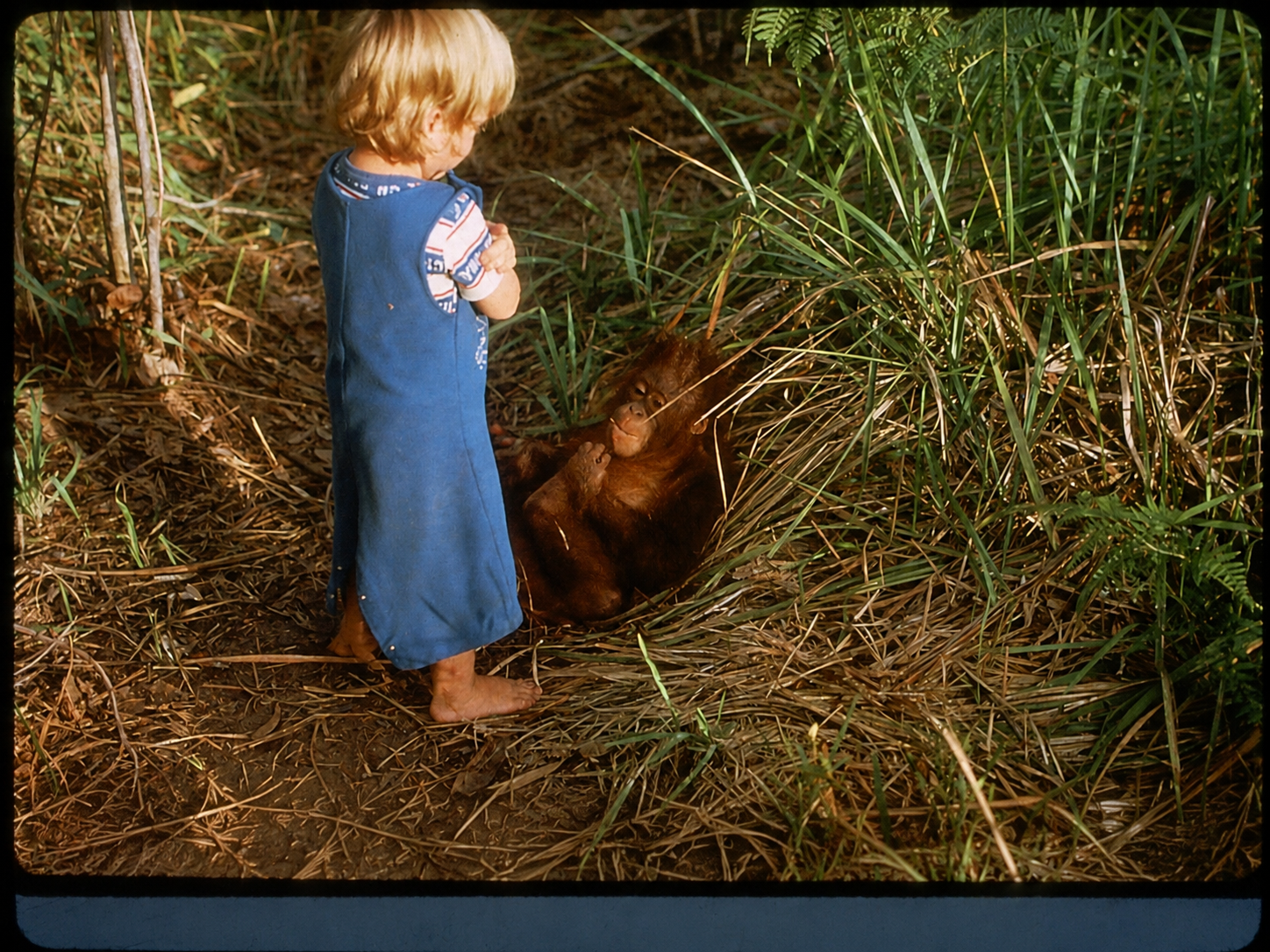
Princess arrived at Camp Leakey sometime between 1977 and 1978, around the same time I did. She was a young ex-captive orangutan, roughly a year old, the same age as I was.
I grew up and left. She, however, remained there, moving between the human world she knew and the forest around it.
When I was younger, I did not think much about how unusual Princess was. She was just one of the crew, another of the orangutans living around Camp Leakey, like Siswi and the others. It was only later that I understood how much interest there had been in her relationship with people.
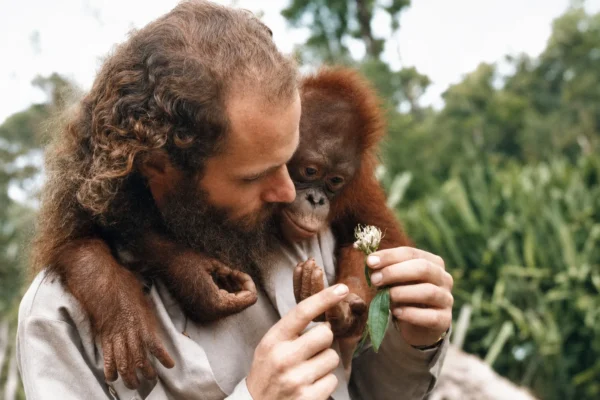
From 1978 to 1980, Dr. Gary Shapiro worked with Princess as part of his American Sign Language studies. During this time, he developed a deep bond with her. He once said that it felt as though Princess had chosen him for the study rather than the other way around.
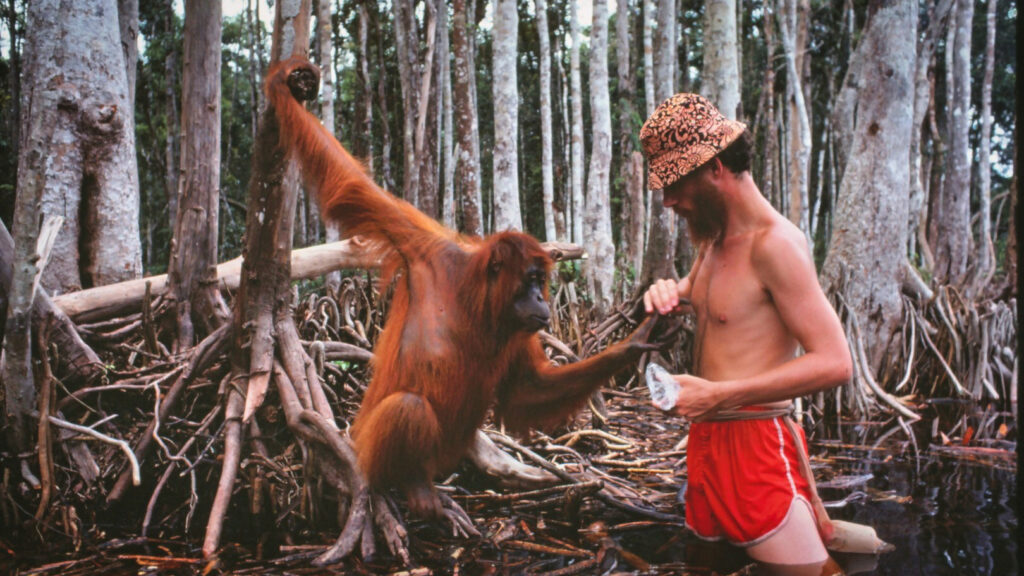
What made Princess interesting was not simply that she learned a number of signs. It was how she used them while interacting with people. She understood that communication could be used to ask for things, respond to others and influence what happened around her. She took the task to heart.
The work with Princess became part of a wider debate about great ape intelligence. The question was whether apes were using language or simply repeating behaviours they had been trained to perform.
Princess probably did not care about that argument.
She had grown up around people and understood them well, but she was still an orangutan. She could leave Camp Leakey, travel through the forest and disappear whenever she wanted to. She belonged to both worlds.
I returned to Kalimantan in 2017 as the location manager for Raised Human. Gary was also involved in the production, and finding Princess was one of our main goals.
Orangutans can disappear into the forest for months at a time, so Princess’s absence did not automatically mean that something had happened. But she usually stayed closer to Camp Leakey, and there were concerns that she had been unwell.
We spent about two weeks looking for her around Camp Leakey and in other parts of the park. I would like to tell you it was a dramatic search, and that in the end we found her high in a tree eating fruit, but we did not. We travelled through the forest, spoke to people working there and checked the places where she was known to spend time. The forest outside camp is enormous, and an orangutan can disappear almost completely if she wants to.
As the days passed, it became less and less likely that we were going to find her.
We eventually found Pan, one of her surviving children, but we never found Princess.
The last time I had seen her was years earlier at Camp Leakey. I had also seen her in 1999, when I was involved with another documentary being filmed there. At the time, there was no reason to think it would be one of the last times.
We still do not know exactly what happened to her. By the end of our search, it seemed increasingly likely that she was gone.
After enough time around orangutans, you stop thinking of them as a different species separate from you. They have their own personalities. Some are curious, some are stubborn, some are playful and some keep their distance. You begin to think of them less as a group of orangutans and more as orange, hairy people with long arms. Princess was one of those individuals.
People who knew Princess remember her as sweet, mischievous and resourceful. She was comfortable around people and unusually good at working out how to get what she wanted.
When trees were flowering on the opposite side of the river, Princess would sometimes take a canoe so she and Pan could cross.
Orangutans taking canoes was not unheard of at Camp Leakey.
Princess always brought hers back.