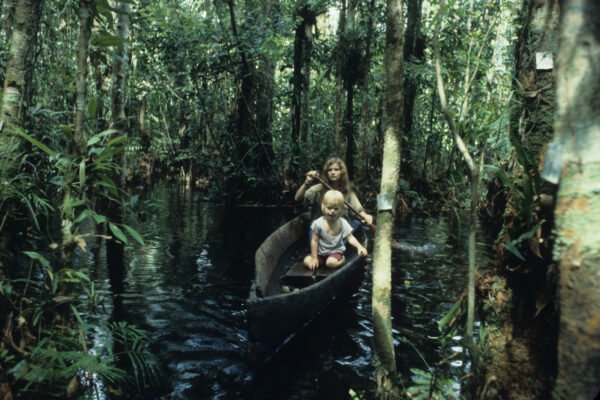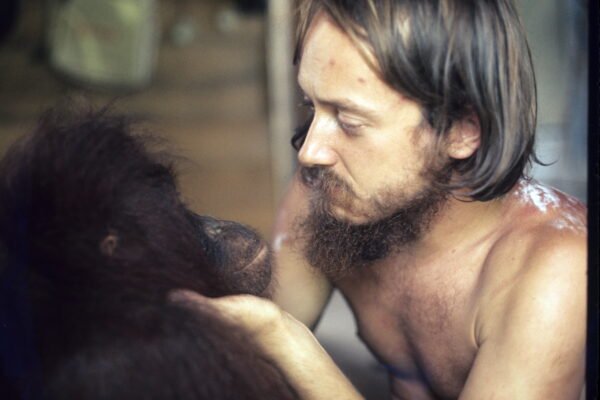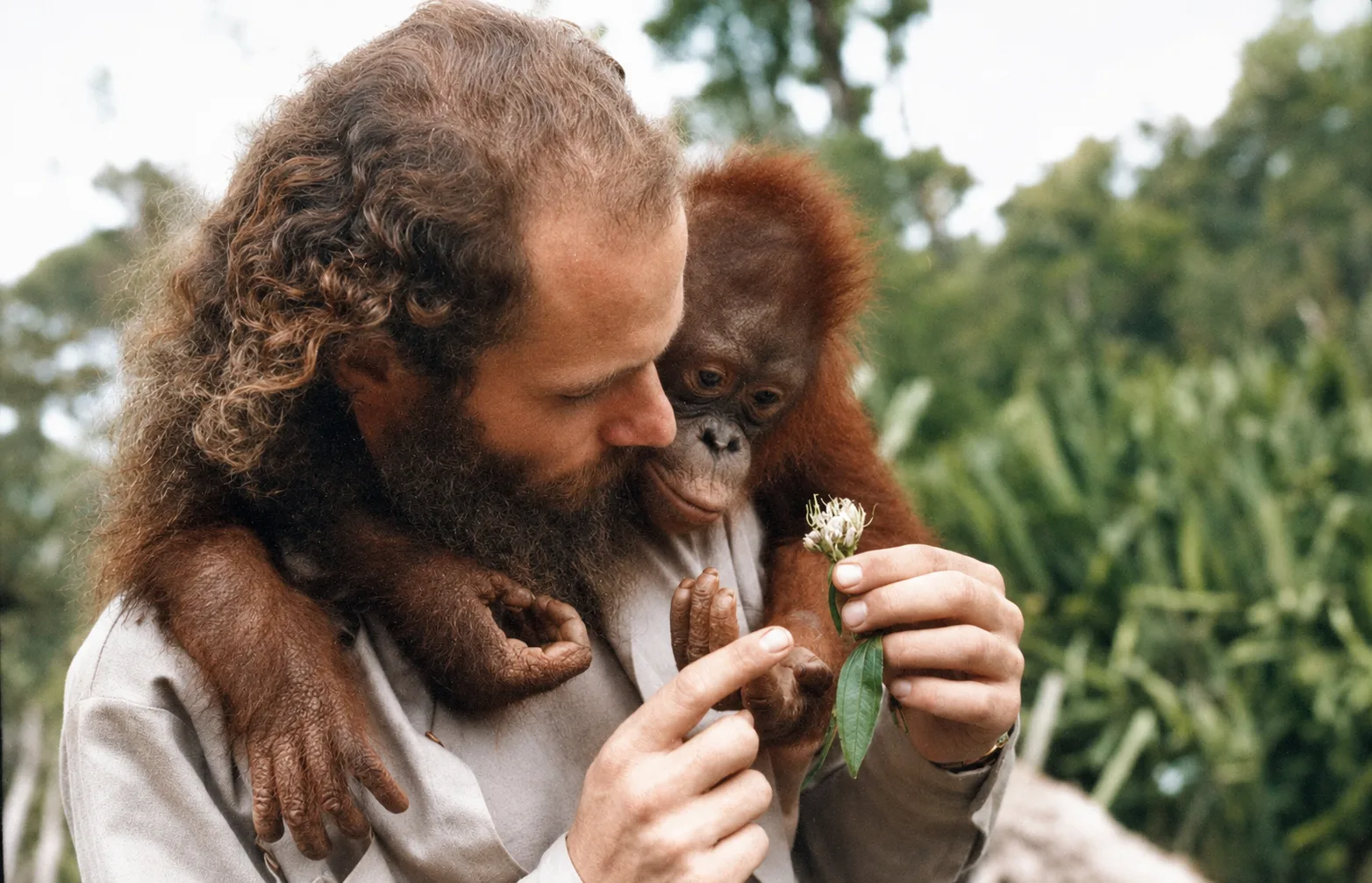
On August 3, 1978, I carried a four-year-old orangutan named Princess from Camp Leakey into the nearby swamp forest. I had arrived at the research camp only a month earlier to study whether orangutans could learn and use signs to communicate.
Princess was the smallest of approximately nine young orangutans I first saw inside the camp’s safety enclosure. The enclosure protected the juveniles from dangers such as pythons and wild pigs, but it could not teach them how to live in the forest.
That education would normally come from an orangutan’s mother.
A young orangutan remains with her mother for years, watching where she travels, what she eats and how she moves through the trees. Princess had lost that teacher. Like the other formerly captive orangutans at Camp Leakey, she faced the difficult task of acquiring the skills her mother would ordinarily have shown her.
As we entered the forest that day, Princess rode on my back and shoulders. For her, I was a source of security. I was also trying to encourage her to become more comfortable away from the camp and eventually more independent of people.
When Princess climbed into a small tree, however, something went wrong. She became frightened.
For approximately half an hour, she remained in the tree, screaming and moving in circles. Her distress was unmistakable. She even defecated—a physical expression of her fear. Although orangutans are often described as natural masters of the forest canopy, there was nothing automatic about this moment for Princess.
She was an orphaned four-year-old who had climbed beyond the familiar reach of the person she trusted. Eventually, she began to come down. She shimmied along the trunk much like a frightened bear cub. When she reached me, she clung tightly to my body.
The incident revealed something easily overlooked when people speak about returning captive orangutans to the wild. Opening a cage is not the same as restoring a life.
Princess possessed the body of an orangutan and many of the instincts of her species, but she had been deprived of the years of observation and instruction that a wild mother provides. She needed opportunities to explore the forest, but she also needed reassurance. Rehabilitation required a delicate balance: giving her security while gradually helping her become less dependent upon it.
Our relationship continued to deepen. On October 11, 1978, Princess leaped from the safety enclosure directly into my arms. Three days later, I began a formal study with four orangutans using an initial vocabulary of ten signs. That day, Princess became my “adopted daughter” who I home-reared for the next 21 months. It was also the day she produced her first unprompted sign for “food.”
Those two events—the leap into my arms and the spontaneous sign—expressed different sides of the same young orangutan. Princess sought the protection of a trusted companion, but she was also learning how to communicate her own intentions.
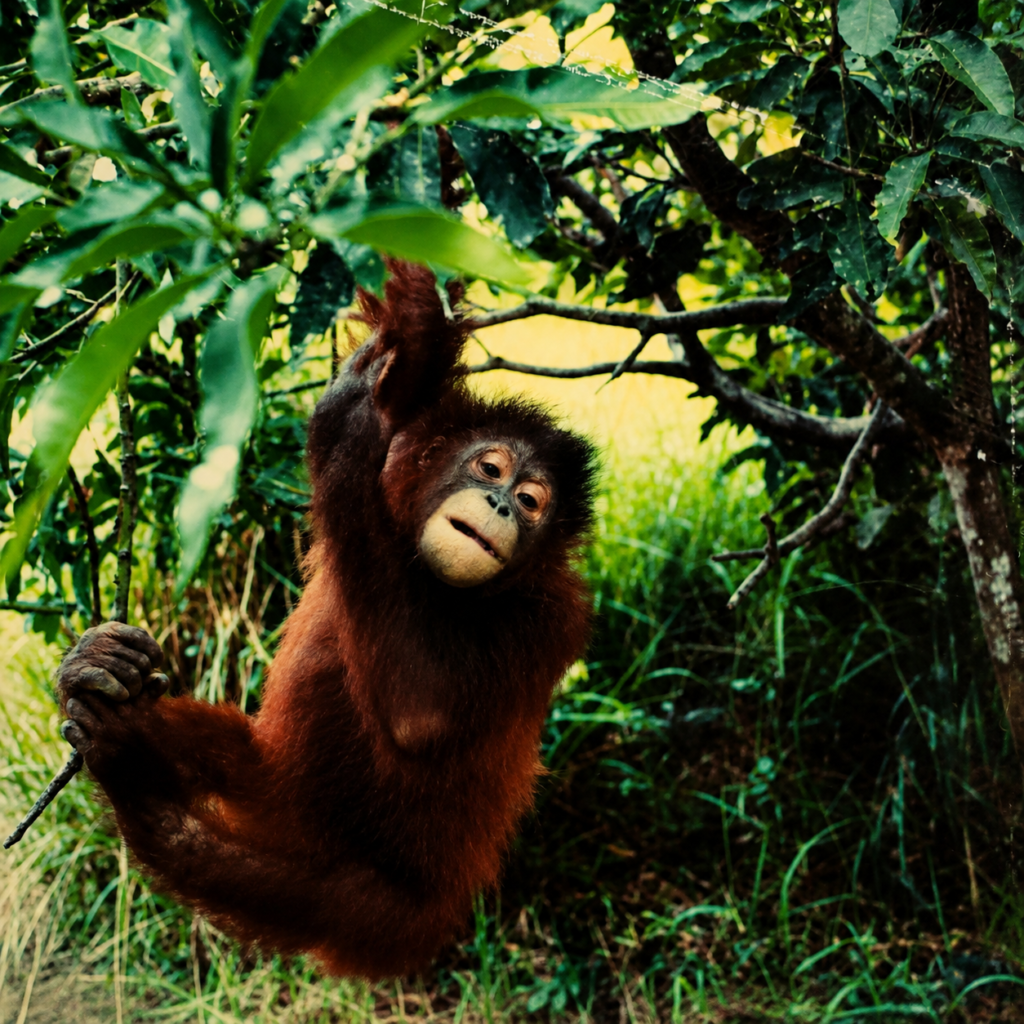
Years later, people would know Princess for her intelligence, her use of signs and tools, and the family she eventually raised in the forest. But when I remember the beginning of our relationship, I often return to that frightened four-year-old in the small tree.
She was not simply an orangutan being “released.” She was a young individual trying to recover an inheritance that captivity had interrupted.
My responsibility was not to make the forest less frightening. It was to remain close enough for Princess to feel secure while she learned that she could meet the forest on her own.