One species with a shrinking range.
The Sumatran orangutan (Pongo abelii) is one of three living orangutan species. Its remaining wild populations are concentrated in northern Sumatra, particularly in Aceh and North Sumatra.
About 11,694 Sumatran orangutans were estimated to remain in the wild in the 2021–2023 range-wide survey, a 19.5% decline from the comparable 2011 baseline. Sumatran orangutans share the island with another orangutan species: farther south, the orangutans of the Batang Toru landscape are now recognized as the Tapanuli orangutan (Pongo tapanuliensis), not a Sumatran orangutan subspecies.
Sumatran Orangutan Range
Wild Sumatran orangutans are now restricted to northern Sumatra. Their largest remaining populations occur within the Leuser Ecosystem, with smaller populations outside it in northern parts of the island.
How can you tell them apart?
The differences are tendencies rather than absolute rules. Appearance varies between individuals, but the two species often differ in build, face, coat and how frequently they travel on the ground.
Sumatran
Pongo abelii
- Generally slimmer build
- Longer, narrower face
- Longer and often paler orange hair
- Narrower cheek pads and more facial hair in mature males
- More consistently arboreal
Bornean
Pongo pygmaeus
- Generally stockier build
- Broader face
- Darker, coarser reddish hair
- Large rounded cheek pads in mature flanged males
- More likely to travel on the ground
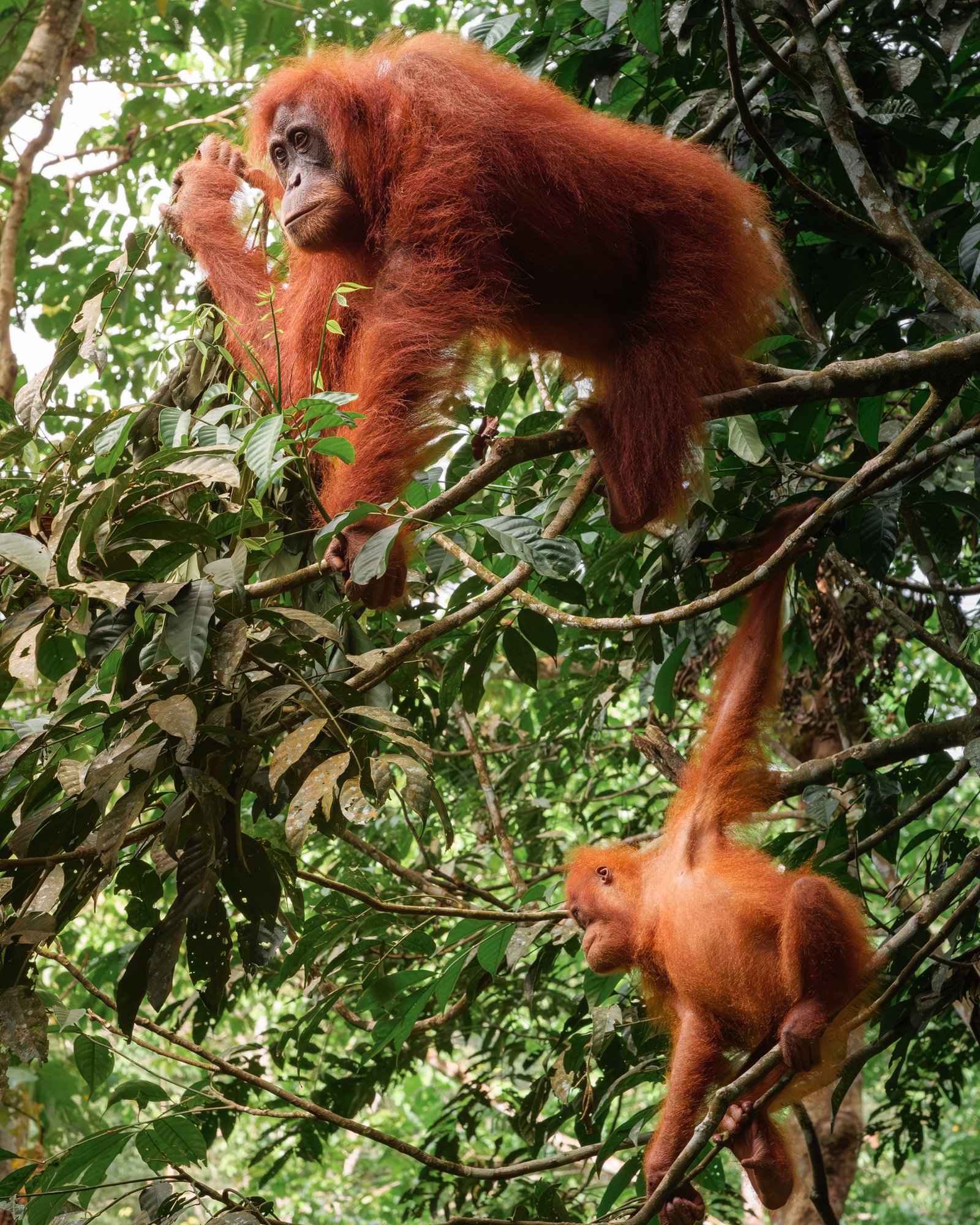 Sumatran
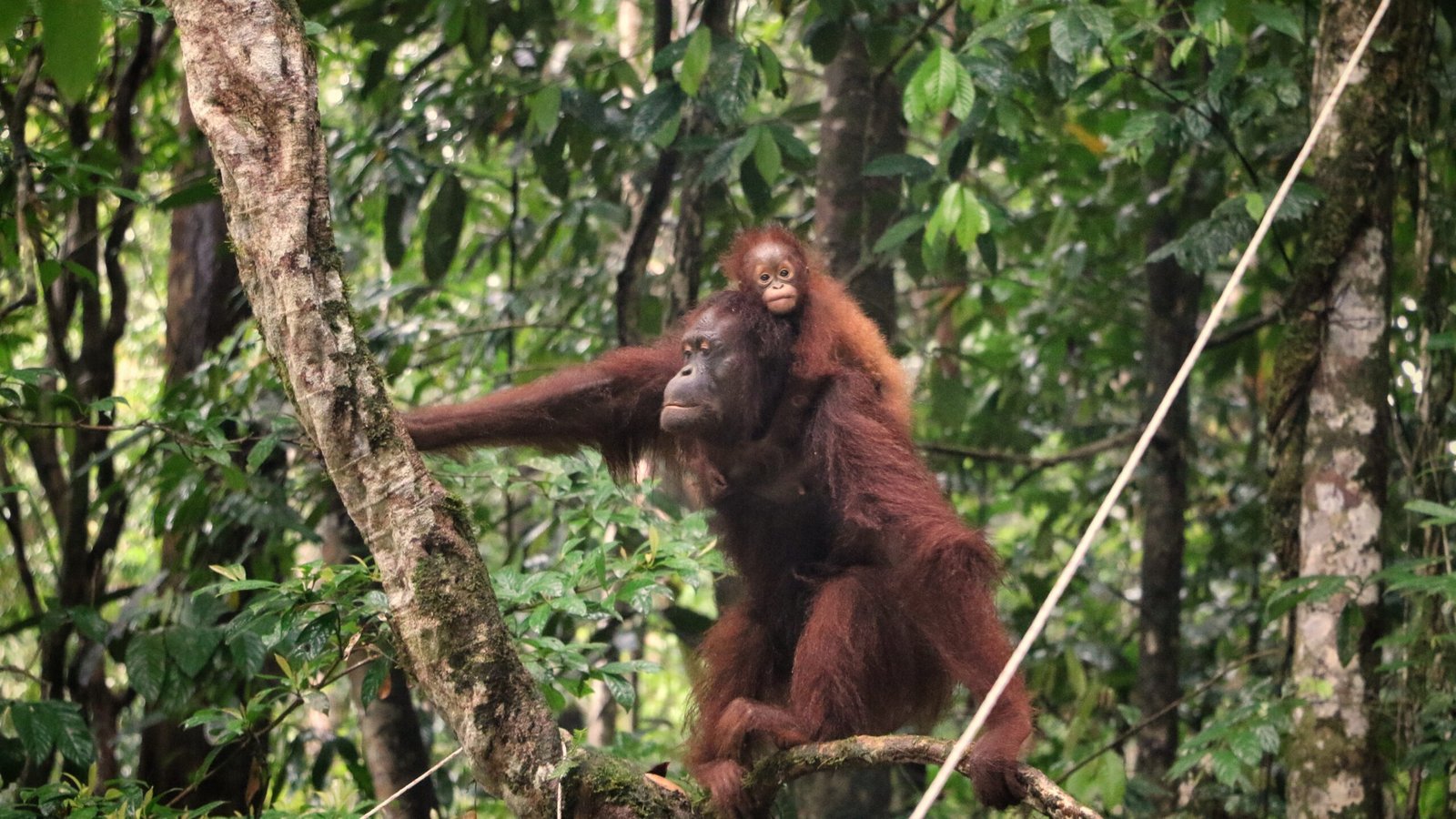 Bornean
-
Face. Sumatrans tend to have longer, narrower faces; Bornean orangutans are generally broader-faced.
-
Hair. Sumatran orangutans often have longer, paler hair; Borneans are usually darker and coarser.
-
Build. Sumatrans tend to be slimmer, while Bornean orangutans are generally stockier.
-
Adult males. Sumatran males tend to have narrower flanges and more facial hair; Bornean males often develop larger rounded cheek pads.
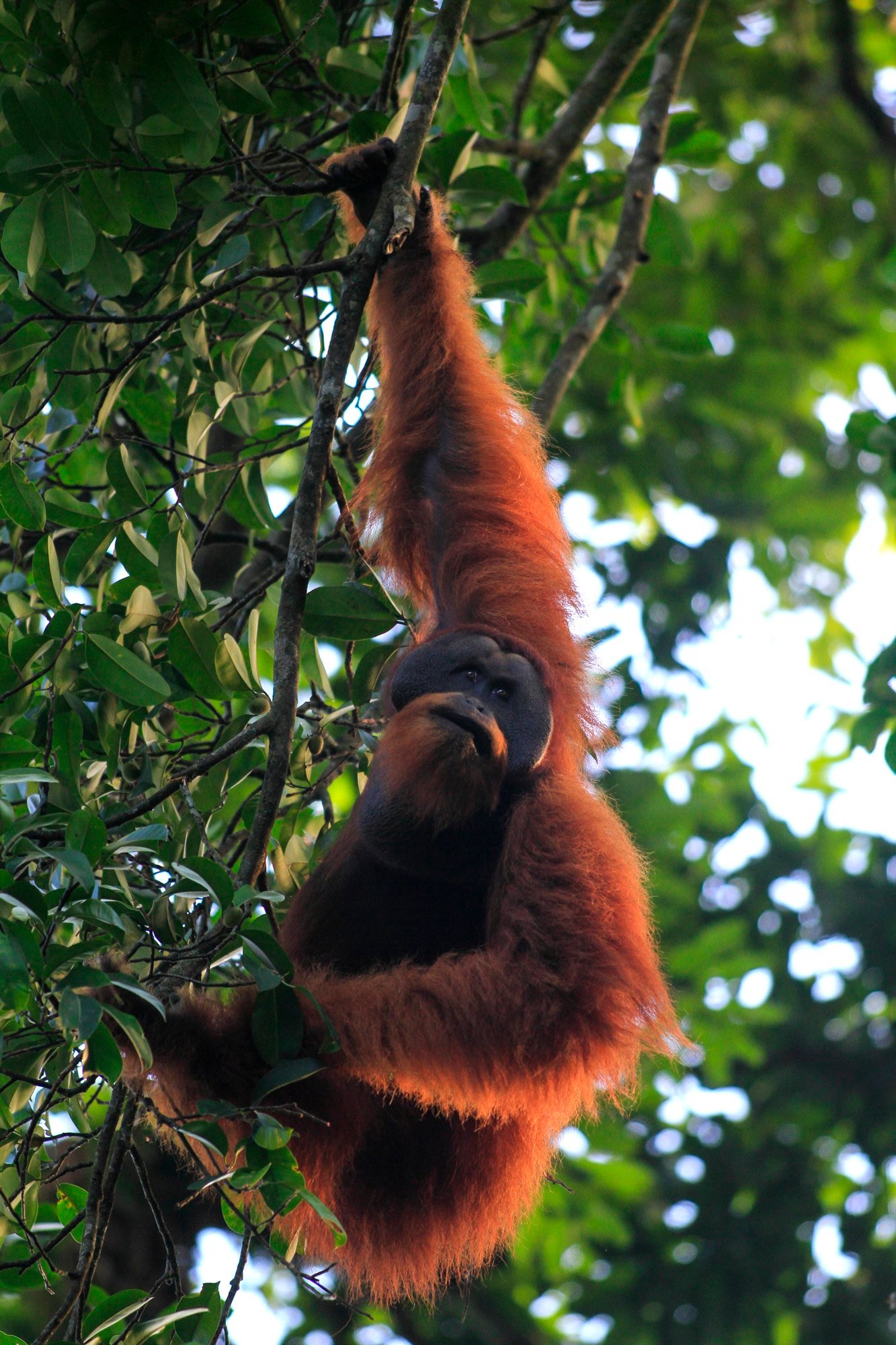
A life lived high in the canopy.
Sumatran orangutans are highly arboreal, spending most of their lives moving, feeding, resting and sleeping in trees. Compared with Bornean orangutans, they generally travel on the ground less often.
- Canopy life. Long arms, flexible shoulders and grasping hands and feet make careful movement through the forest canopy possible.
- Long childhood. Young orangutans spend years alongside their mothers, learning where, when and how to find hundreds of different foods.
- Flexible diet. Fruit is especially important when available, supplemented by leaves, bark, insects and other forest foods.
- Learned behaviour. Some Sumatran populations show geographically variable feeding traditions and documented tool use.
Critically Endangered
The Sumatran orangutan is Critically Endangered. Its remaining populations are concentrated in a relatively small part of northern Sumatra, making continued forest loss and fragmentation especially serious.
Habitat is lost or divided by agriculture, roads, logging and other development. Orangutans may also be killed during conflict with people or captured when forests are cleared. Their exceptionally slow reproduction means the loss of adult animals can have effects that last for decades.
Explore orangutan threatsThe stronghold of the Sumatran orangutan.
The Leuser Ecosystem contains the largest remaining Sumatran orangutan populations, making this connected forest landscape central to the species’ survival.
Leuser spans parts of Aceh and North Sumatra and contains lowland rainforest, peat swamp, hills and mountain forest. Protecting connections between these habitats matters because isolated orangutan populations are more vulnerable over time.
Go deeper.
For more on orangutan biology and behaviour, see Orangutan Facts. For the other species, continue to the Bornean and Tapanuli orangutan pages.
- IUCN Red List: Sumatran Orangutan
- IUCN SSC APES Atlas: Sumatran Orangutan
- Hadi et al. 2026: Population status of Sumatran and Tapanuli orangutans, 2021–2023
- Smithsonian National Zoo: Orangutan biology and behaviour
- Orangutan Facts
- Bornean Orangutan
- Tapanuli Orangutan
- Threats to Orangutans
- Palm Oil and Orangutans