The People of the Forest
Orangutans are great apes found only in the rainforests of Borneo and Sumatra. Their name comes from the Indonesian and Malay words orang, meaning person, and hutan, meaning forest.
Orangutans are the world’s largest tree-dwelling mammals and are specially adapted for life in the forest canopy with exceptionally long arms, flexible shoulders, and powerful grasping hands and feet. Highly intelligent, it’s easy to see why these tree-dwelling apes are called the “People of the Forest.”
Where Do Orangutans Live?
Orangutans live naturally only on the islands of Borneo and Sumatra in Southeast Asia. The three living species occupy separate rainforest ranges across Borneo, northern Sumatra and the Batang Toru ecosystem.
Critically Endangered
All three living orangutan species are classified as Critically Endangered by IUCN, the highest threat category before extinction in the wild.
Scientific Classification
| Class | Mammalia |
|---|---|
| Order | Primates |
| Superfamily | Hominoidea |
| Family | Hominidae |
| Subfamily | Ponginae |
| Genus | Pongo |
| Species |
Pongo pygmaeus Pongo abelii Pongo tapanuliensis |
|
Bornean Subspecies |
Pongo pygmaeus pygmaeus Pongo pygmaeus wurmbii Pongo pygmaeus morio |
*Taxonomy follows the currently recognized classification of the three living orangutan species and the three Bornean subspecies.
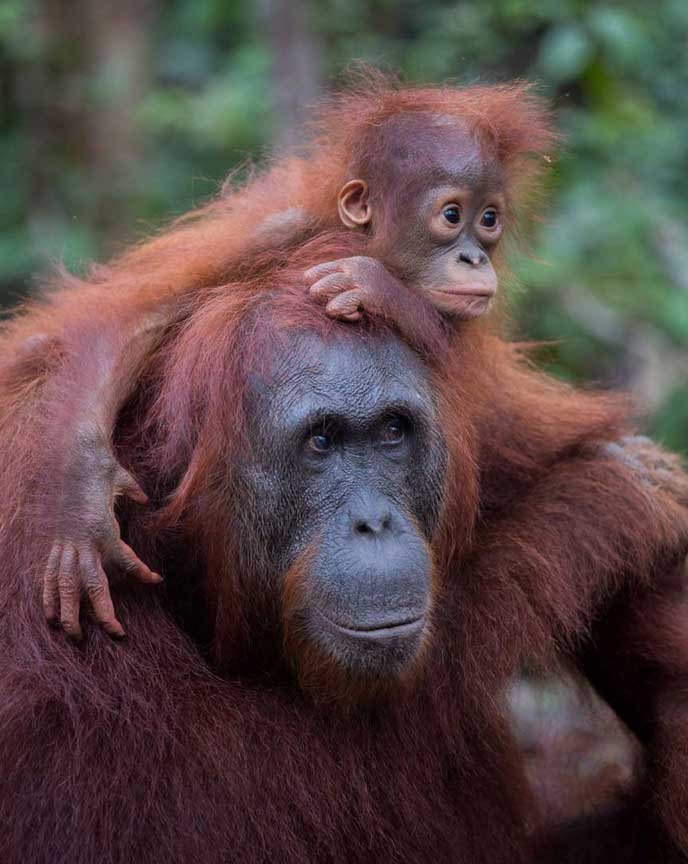
Meet the Bornean, Sumatran and Tapanuli Orangutans
How Many Orangutans Are Left?
Published estimates put wild populations at about 104,700 Bornean, 11,694 Sumatran and 716 Tapanuli orangutans. Because these estimates come from different surveys and years, they are best understood as separate estimates rather than as one precise global population count.
 01
01
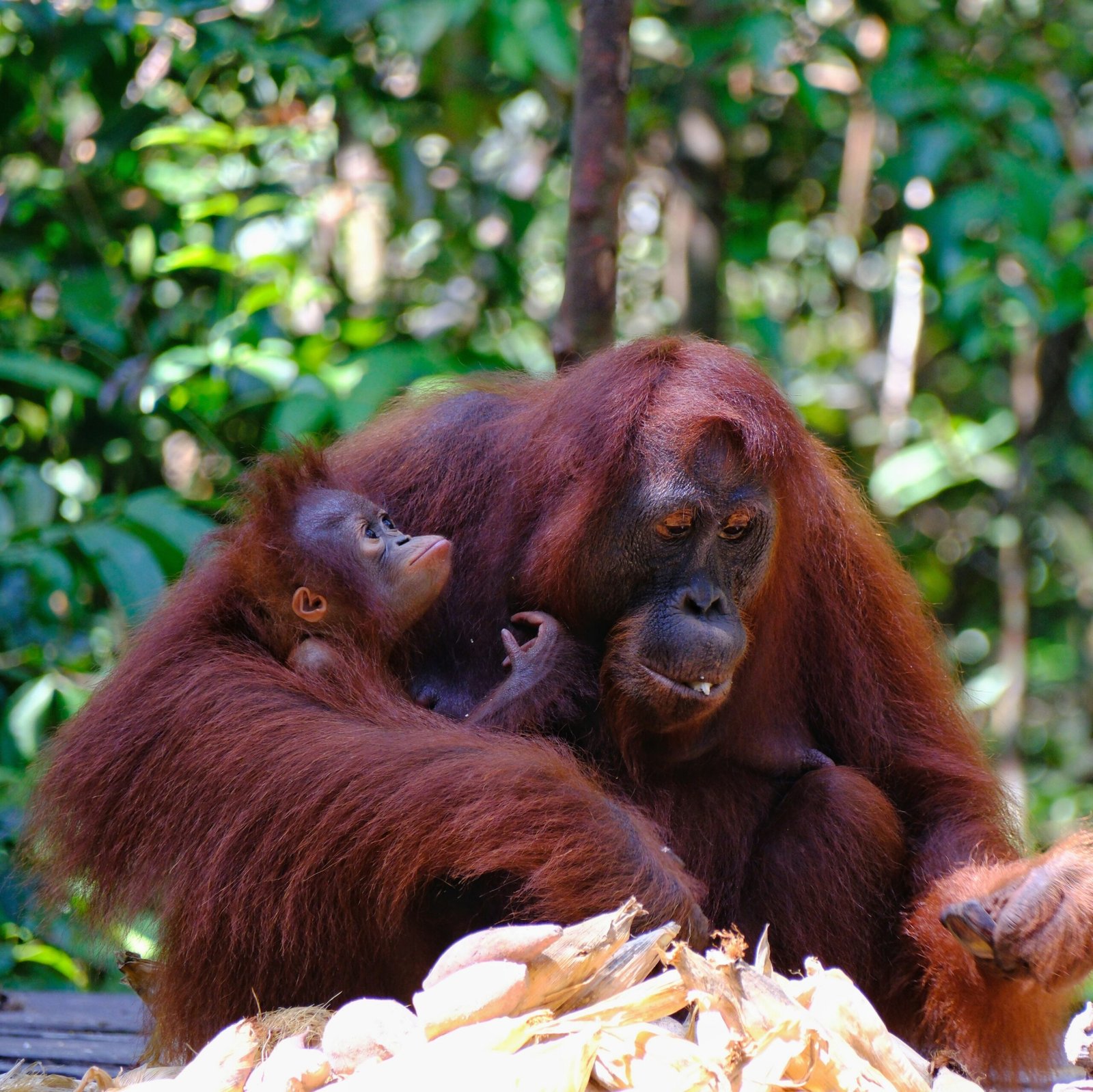
Bornean Orangutan
Pongo pygmaeus
Bornean orangutans generally have stockier bodies, broad faces and darker, coarser hair than the other orangutan species. Mature males may develop large, rounded cheek pads and a prominent throat pouch. They are the most widespread.
Estimated population: 104,7002016 population estimate
 02
02
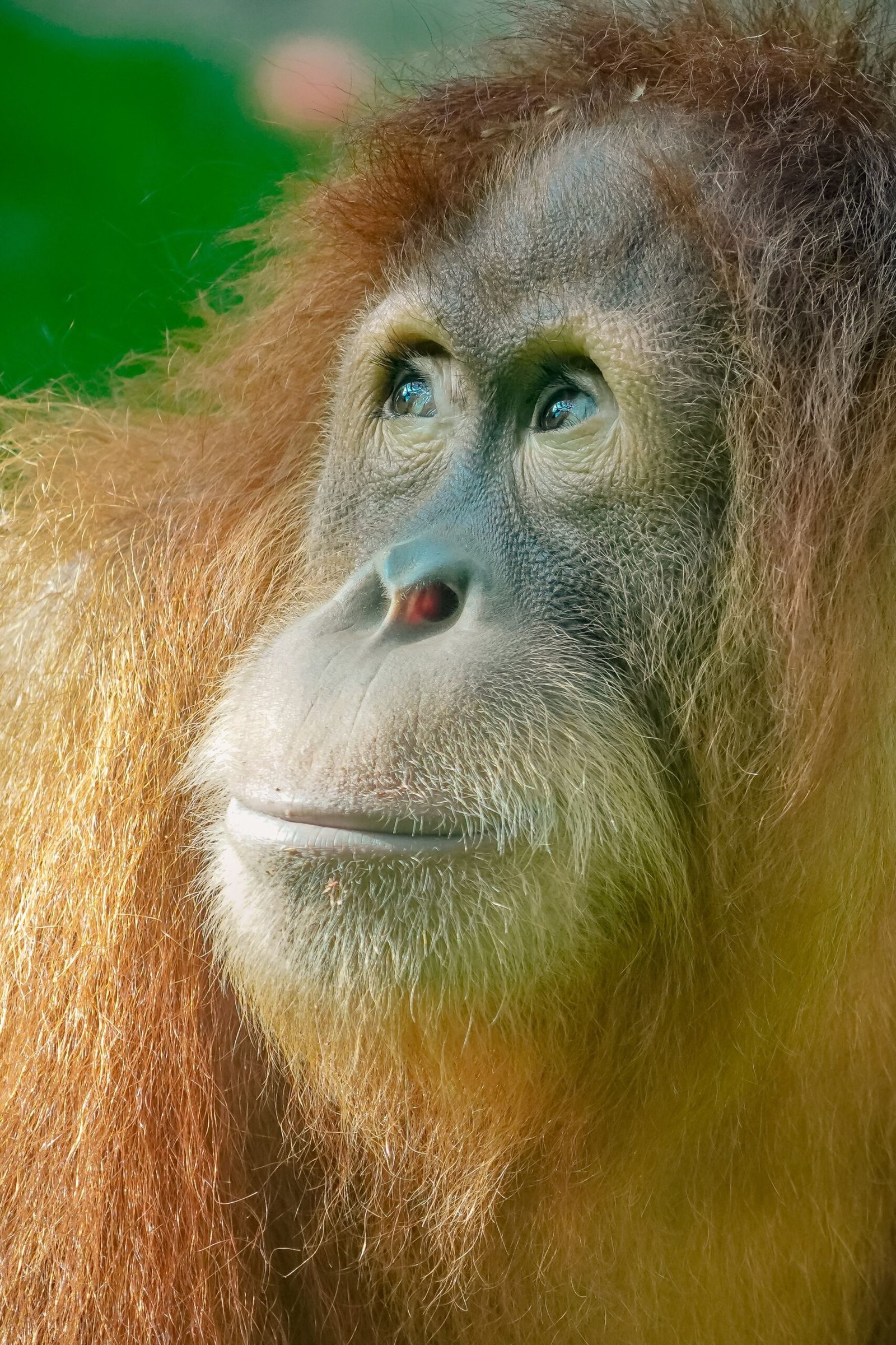
Sumatran Orangutan
Pongo abelii
Sumatran orangutans generally have slimmer bodies, longer faces and longer, lighter orange hair than Bornean orangutans. Mature males often develop narrower cheek pads, along with prominent moustaches and beards.
Estimated population: 11,6942021–2023 range-wide survey
 03
03
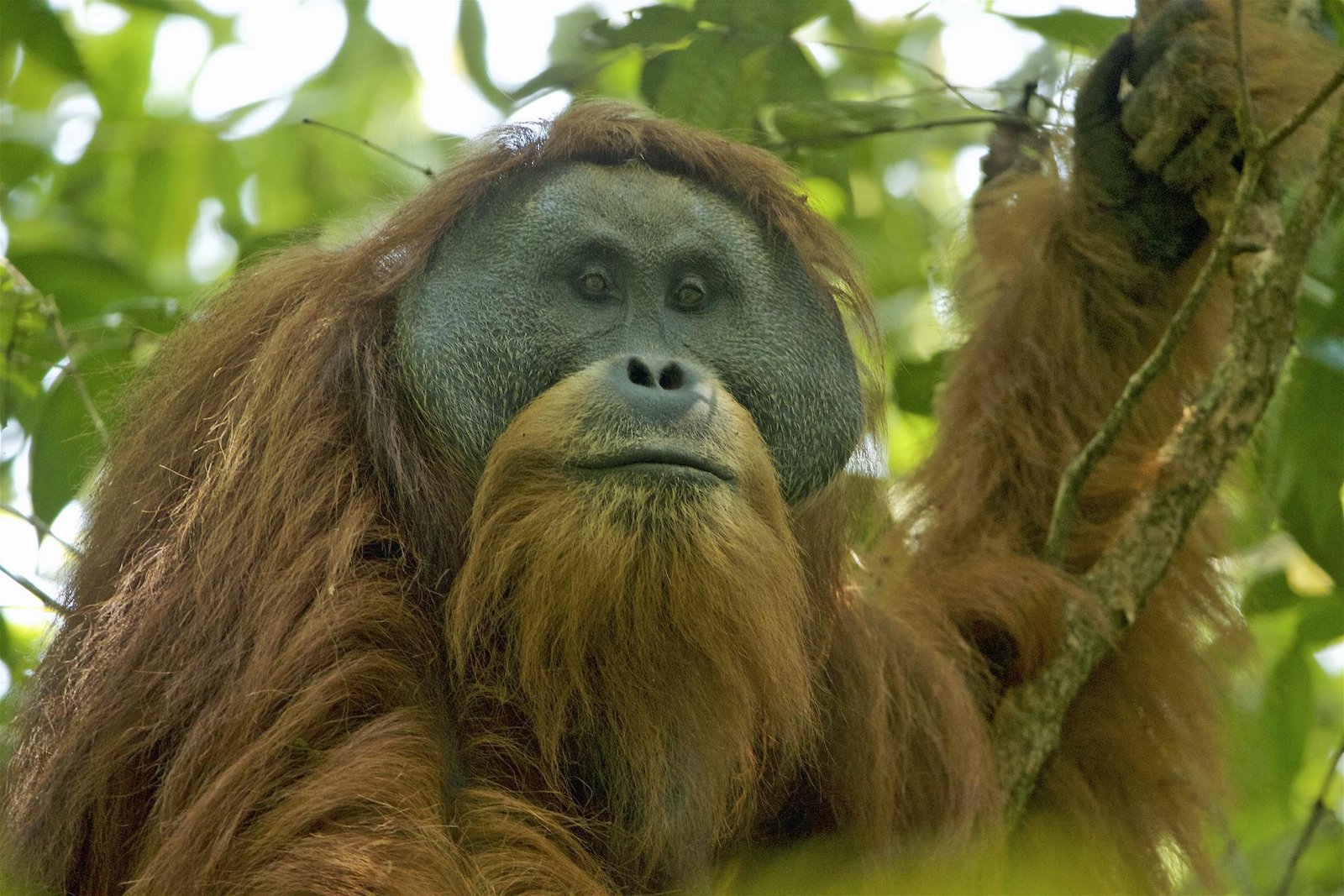
Tapanuli Orangutan
Pongo tapanuliensis
Tapanuli orangutans have thick, frizzy orange hair, relatively small heads and more prominent moustaches and beards. Mature males develop flatter cheek pads covered with fine, pale hair. They are the least widespread.
Estimated population: 7162021–2023 range-wide survey
The Three Bornean Subspecies
Pongo pygmaeus pygmaeus
NW Bornean Orangutan. Found in Sarawak and northern West Kalimantan. Its remaining habitat includes lowland and hill forests in the northwest of Borneo.
Sarawak + Northern West KalimantanPongo pygmaeus wurmbii
Central Bornean Orangutan. Found in southern West Kalimantan and Central Kalimantan. This subspecies occupies several of the largest remaining orangutan landscapes on Borneo.
Central + Southern West KalimantanPongo pygmaeus morio
NE Bornean Orangutan. Found in East Kalimantan, North Kalimantan and Sabah. Populations occur across forests in the northeastern part of the island.
East + North Kalimantan + SabahHow Orangutans Live
Life in the Canopy
Orangutans spend most of their lives high in the rainforest canopy, where they feed, travel, rest and raise their young. Their exceptionally long arms, powerful hands and strong grip help them move carefully through the trees, although orangutans, especially adult males, also travel on the ground.
Rather than leaping rapidly from branch to branch, orangutans usually move slowly and deliberately. They test branches before placing their full weight on them and may sway smaller trees back and forth until they can reach the next part of the canopy.
Orangutans are the most solitary of the great apes, but they are not completely solitary. Adult females generally travel with their dependent young, while mature males range across large, overlapping home ranges and communicate using deep, echoing long calls.
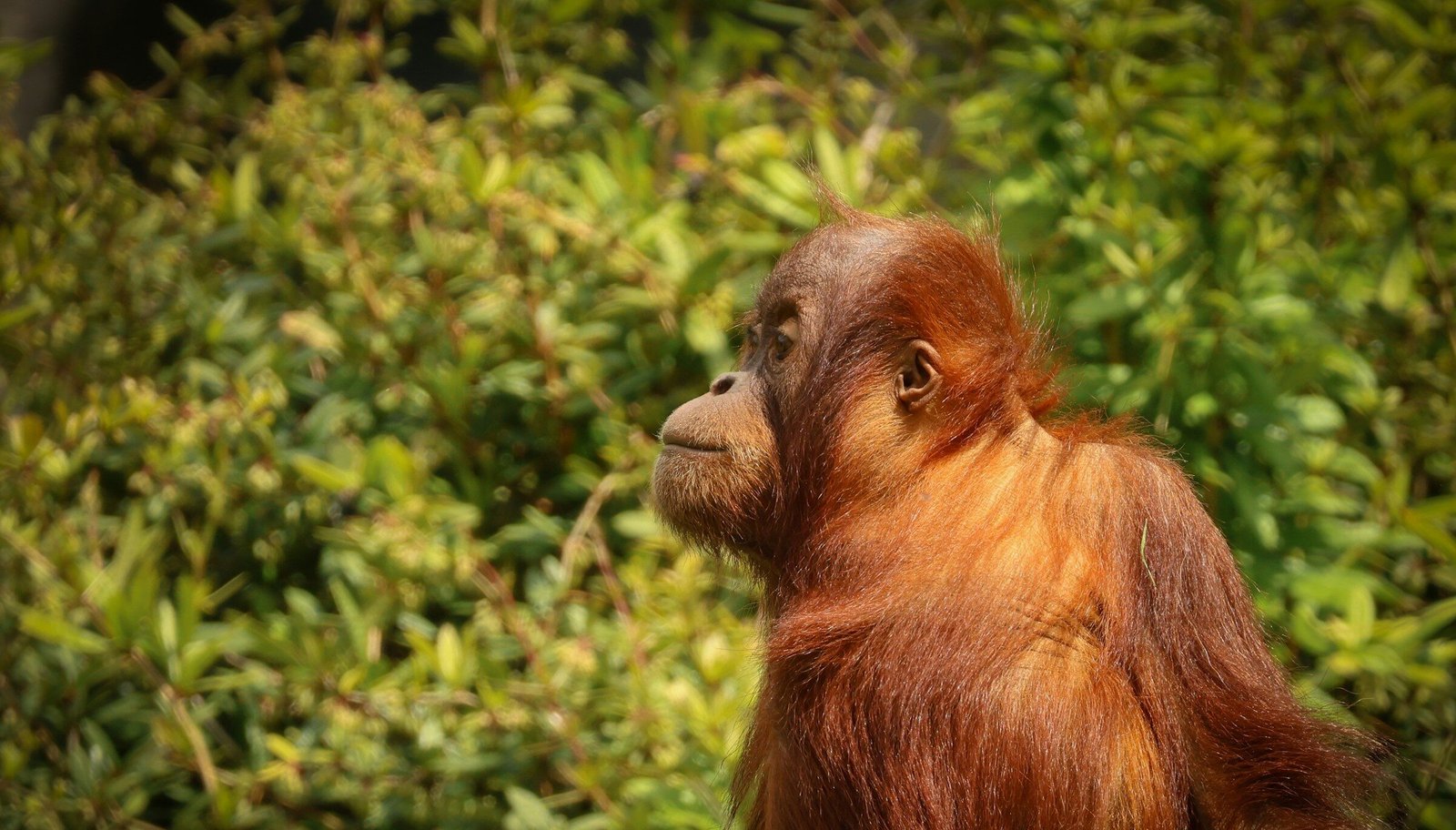
Intelligent Forest Dwellers
Orangutans are known for their remarkable memory, patience and problem-solving abilities. They can remember the locations of fruiting trees, recognize seasonal changes in the forest and plan routes through large and complicated territories.
In some populations, orangutans have been observed using sticks to extract insects, seeds or honey from difficult-to-reach places. They may also use leaves as gloves, napkins, umbrellas or drinking tools, adapting objects in their environment for different purposes.
Young orangutans spend years watching and learning from their mothers. Through observation, practice and experience, they gradually learn how to find food, build nests, avoid danger and survive independently in the rainforest.
What Do Orangutans Eat?
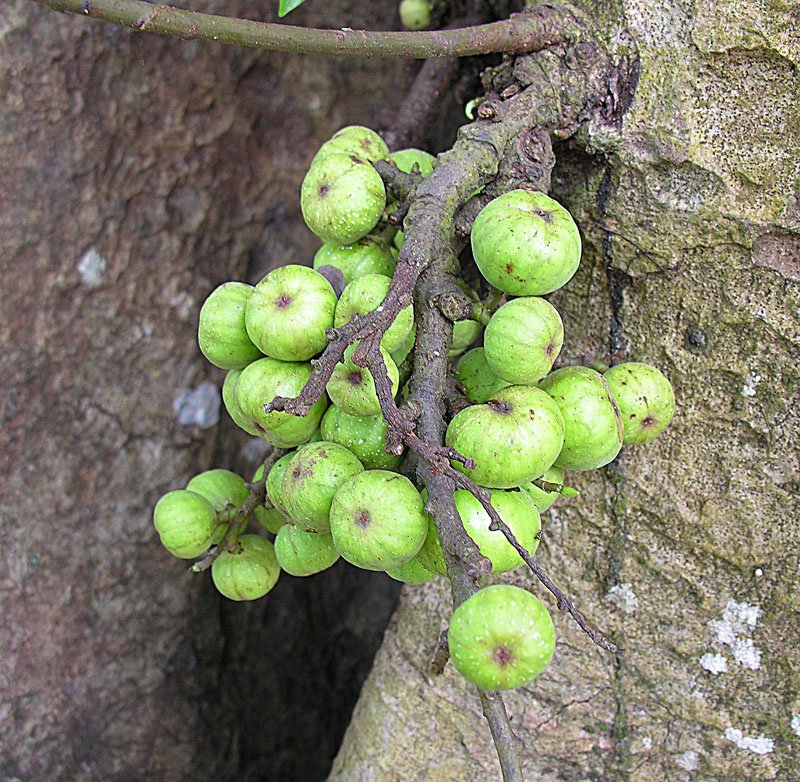
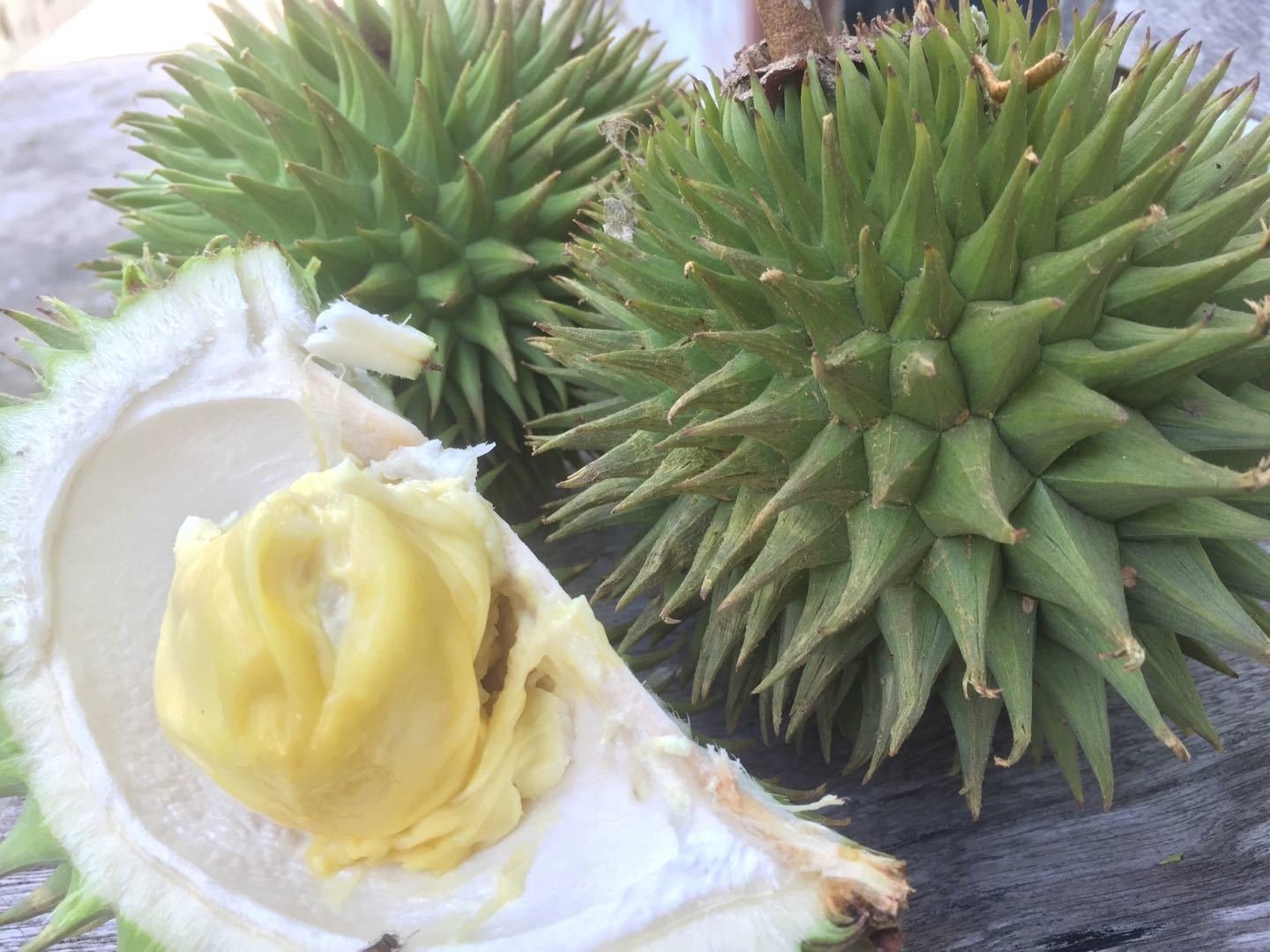
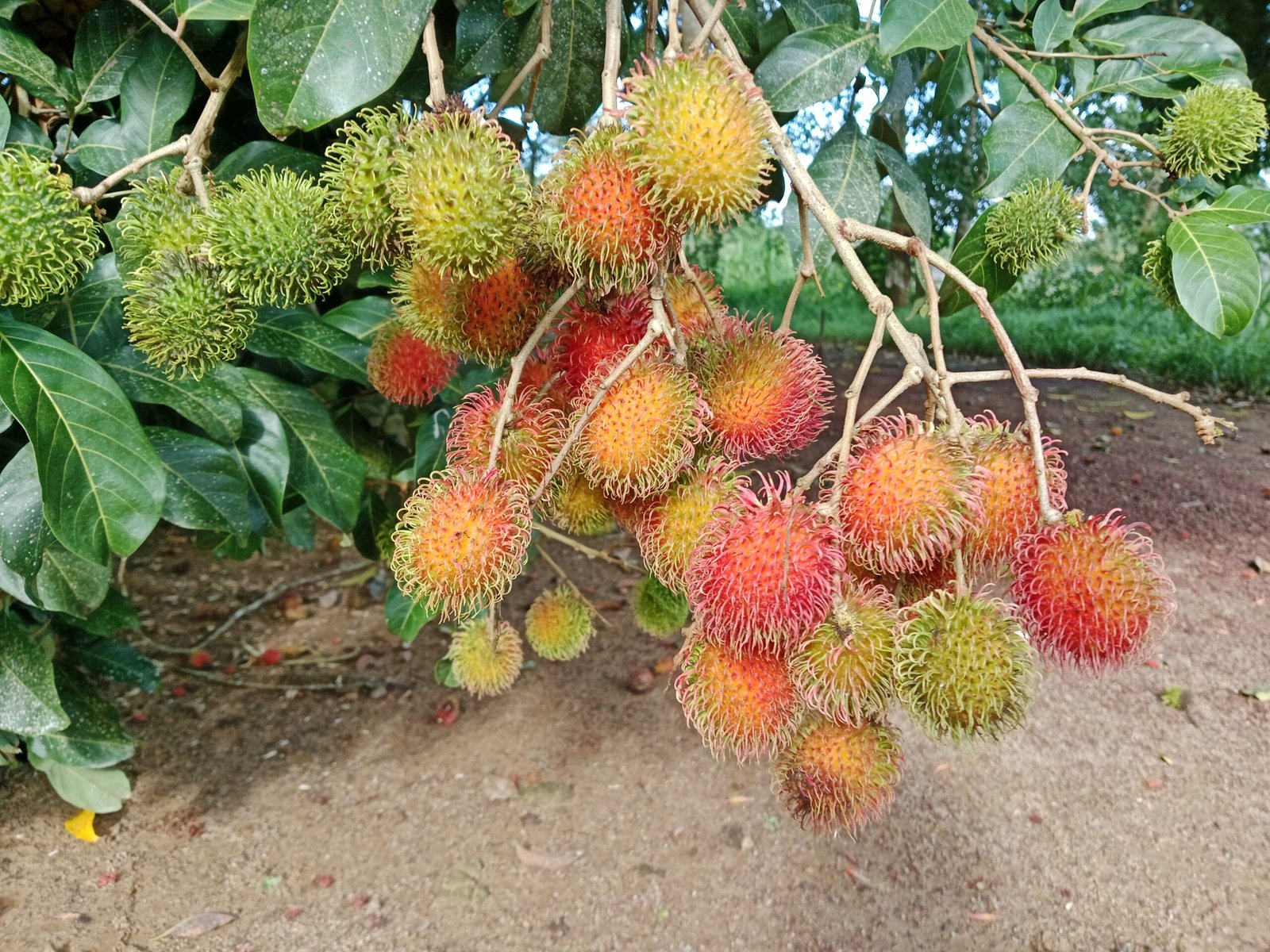
Orangutans eat a varied forest diet dominated by fruit, including figs, durians and other seasonal fruits. They also eat leaves, bark, flowers, seeds, insects and occasionally honey. What they eat changes with what is available, so orangutans must remember where different foods can be found across large areas of forest.
Finding enough food in the rainforest requires an extraordinary amount of knowledge. Orangutans eat hundreds of different forest foods, but fruiting trees are scattered and unpredictable. Young orangutans spend years learning from their mothers what to eat, how to open difficult foods and where to search when familiar trees are bare. They also disperse seeds as they travel, but that is only one result of a much more complex challenge: learning how to survive independently in the rainforest.
Some of the fruits orangutans eat
Daily Nest Builders
Every evening, orangutans typically build a sleeping nest high in the trees, usually constructing a new one rather than reusing an old nest. They begin by bending and weaving strong branches together to create a secure platform capable of supporting their weight throughout the night.
Once the main structure is complete, they may add smaller branches and leafy material to make the nest more comfortable. Some orangutans create leafy cushions, blankets or overhead coverings that provide additional protection from wind and rain.
Nest building is a skill that young orangutans learn by watching their mothers. Juveniles often practise making small or incomplete nests before they are able to construct the strong, carefully designed sleeping platforms used by adults.
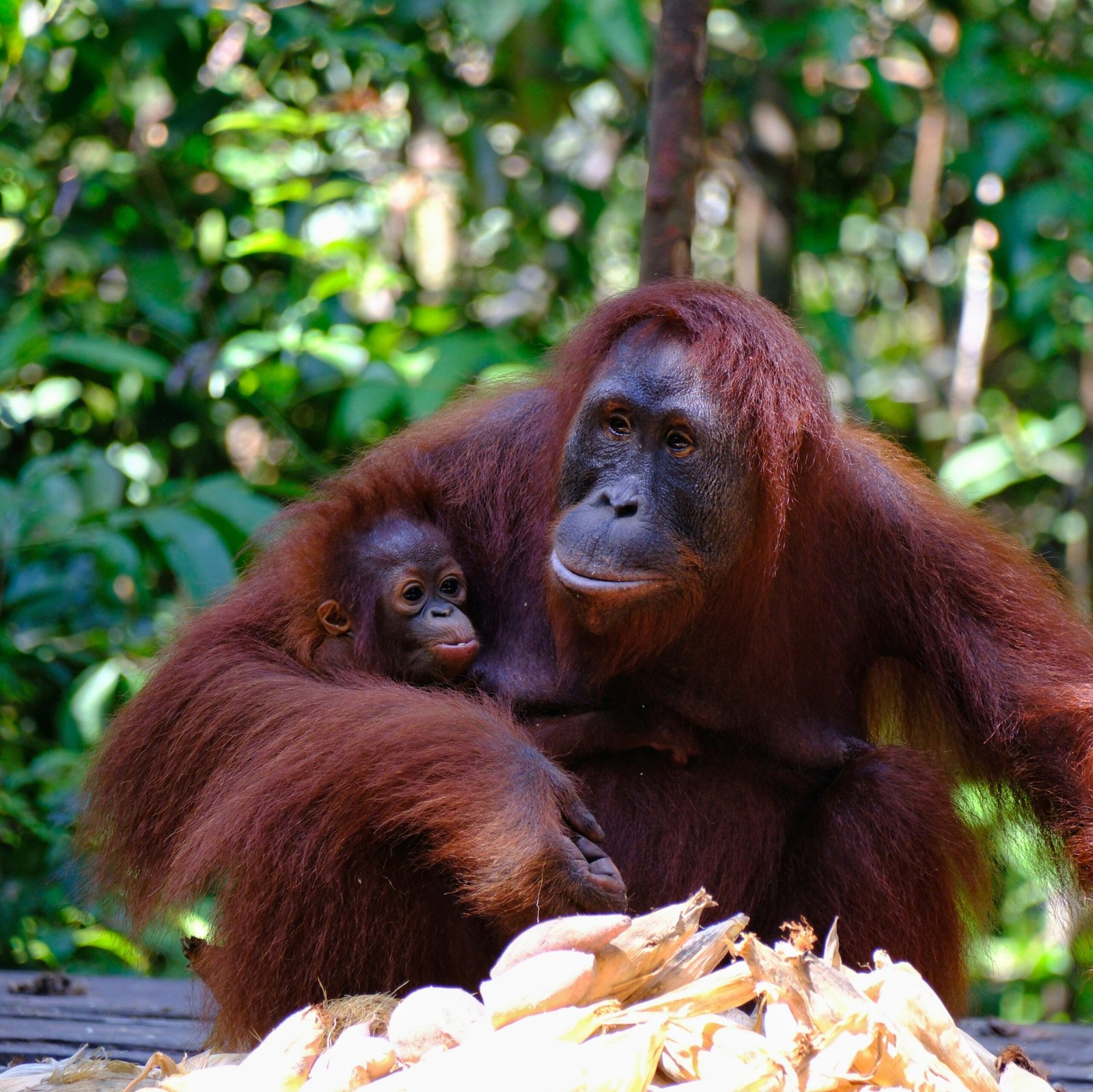
A Long Childhood
Young orangutans remain with their mothers for many years, longer than almost any other animal apart from humans. An infant depends completely on its mother for transportation, protection, food and guidance during the earliest stages of its life.
As the young orangutan grows, it begins exploring nearby branches while remaining close to its mother. It watches what she eats, follows her through the canopy and gradually learns which plants are safe, where fruiting trees can be found and how to recognize potential danger from venomous snakes and scorpions and other hazards of the rainforest.
This long learning period is essential because survival in the rainforest requires an enormous amount of knowledge. A young orangutan must master thousands of decisions before becoming independent, which is one reason the loss of an adult female can have such devastating consequences for her offspring.
How Long Do Orangutans Live?
Orangutans can live for more than 50 years in the wild, although exact lifespan is difficult to measure because following the same wild individuals from birth to death can take decades. In professional zoological care, a small number have lived into their 60s.
Their long lives are part of an unusually slow life history. Young orangutans remain with their mothers for years, and wild females give birth only about once every 7–8 years on average, so populations recover very slowly when adults are lost.
Flanged and Unflanged Males
Adult male orangutans occur in two very different forms. Flanged males develop large cheek pads, an enlarged throat sac and much greater body size, while unflanged males can be sexually mature and capable of fathering offspring without those features. Flanged males are generally dominant over unflanged males, and the presence of a dominant flanged male may sometimes delay flange development in others, but dominance is not known to act as a simple trigger. Age, hormones, physical condition and the social environment all appear to play a role, and some males remain unflanged for many years or even throughout life. Once flange development begins, the change appears to be irreversible.
Built for the Treetops
An orangutan’s arms can stretch much farther than its legs, making its body perfectly adapted for life above the ground. A mature orangutan may have an arm span considerably greater than its standing height, allowing it to reach across wide gaps between branches.
Flexible shoulders, curved fingers and powerful grasping hands help orangutans climb and suspend themselves beneath branches. Their feet can also grip like hands, providing additional balance and support as they move through the canopy.
These adaptations allow orangutans to travel through the forest while placing relatively little weight on any single branch. However, when forests are cleared or fragmented, gaps in the canopy can force them onto the ground, where they face greater risks from people, vehicles, fires and other dangers.
Guardians of the Rainforest
Protecting orangutan habitat also protects some of Southeast Asia’s most important tropical forests, along with the biodiversity and carbon they contain.
-
01
Umbrella Species
Protecting orangutan habitat also protects countless other rainforest species that depend on the same forests for survival.
-
02
Remarkably Like Us
Orangutans are among our closest living relatives and are highly intelligent, using tools, solving problems and learning complex skills from one another.
-
03
Forest Carbon
The forests orangutans depend on store carbon and help regulate the global climate.
Threats Facing Orangutans
Deforestation, palm oil expansion, illegal wildlife trade, forest fires, and habitat fragmentation have pushed orangutans to the edge.
Explore the Threats- Habitat loss
- Palm oil plantations
- Illegal wildlife trade
- Human-wildlife conflict
- Forest fires