The forest is disappearing beneath them.
Orangutans are critically endangered primarily because their rainforest habitat is being cleared, fragmented and burned. Habitat loss also increases conflict with people and makes orangutans more vulnerable to killing, capture and the illegal wildlife trade.

Their home is being cut into pieces.
Orangutans evolved to live high in a connected rainforest canopy. They depend on large territories, seasonal fruit trees and branches that allow them to move without regularly descending to the ground.
Logging, roads, mines, farms and settlements can leave behind fragments that still appear green but no longer contain enough food, nesting trees or safe travel routes to sustain orangutans over time.
- Food and nesting trees are removed
- Populations become isolated from one another
- Forest edges bring orangutans closer to people
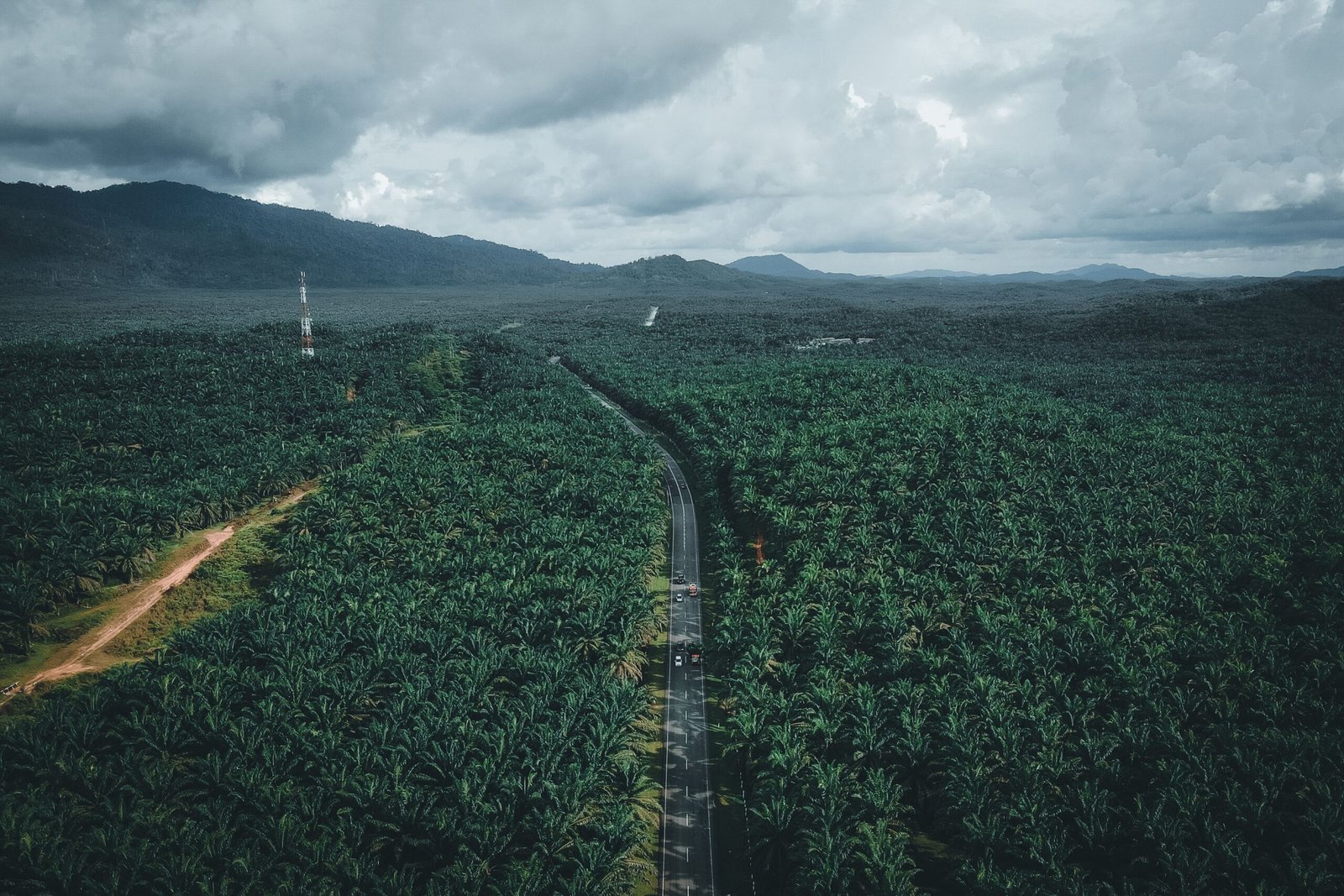
A plantation is green but it is not a rainforest.
A rainforest contains many layers of vegetation, seasonal foods, nesting trees and connected canopy. A single-crop plantation cannot replace that complexity, even when it appears lush from a distance.
Where natural forest is converted, orangutans may be stranded in small fragments or move into plantation areas while searching for food. That displacement magnifies the risk of conflict, injury, death and removal.
- Biodiverse forest is replaced by monoculture
- Natural feeding and travel routes disappear
- Displaced orangutans may be treated as crop pests
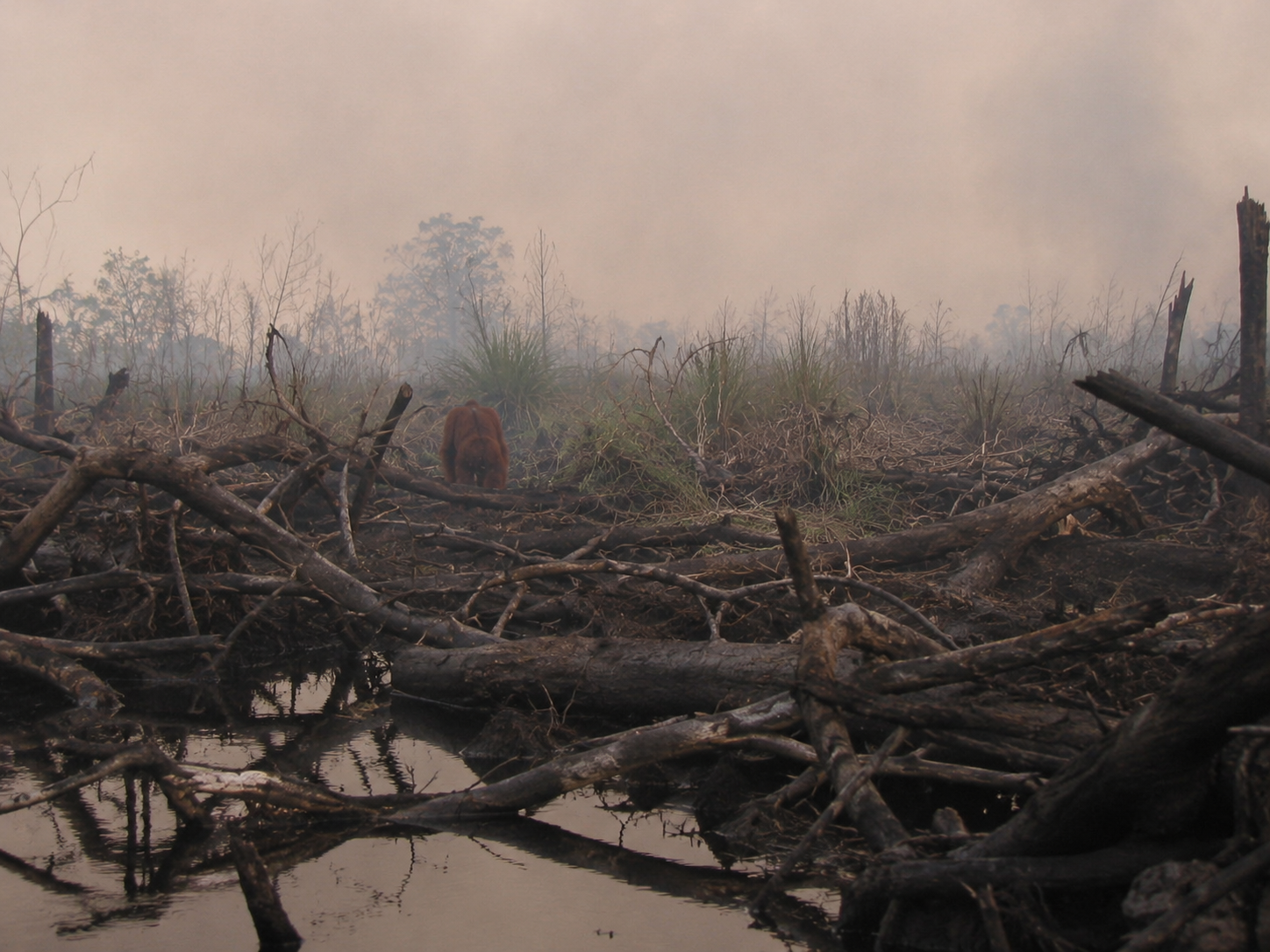
Fire can erase a forest in days.
Fires used to clear land can spread beyond their intended boundaries and move through damaged forest and carbon-rich peat. Drained peat is especially vulnerable because fire can continue below the surface.
See current satellite fire detections across Borneo and Sumatra on the live habitat-fire map.
Orangutans may be injured, separated from their young or driven into exposed areas. Animals that survive the flames can still be left without enough food or shelter to remain in the area.
- Animals are injured, killed or displaced
- Peat fires can continue beneath the surface
- Smoke harms wildlife and nearby communities
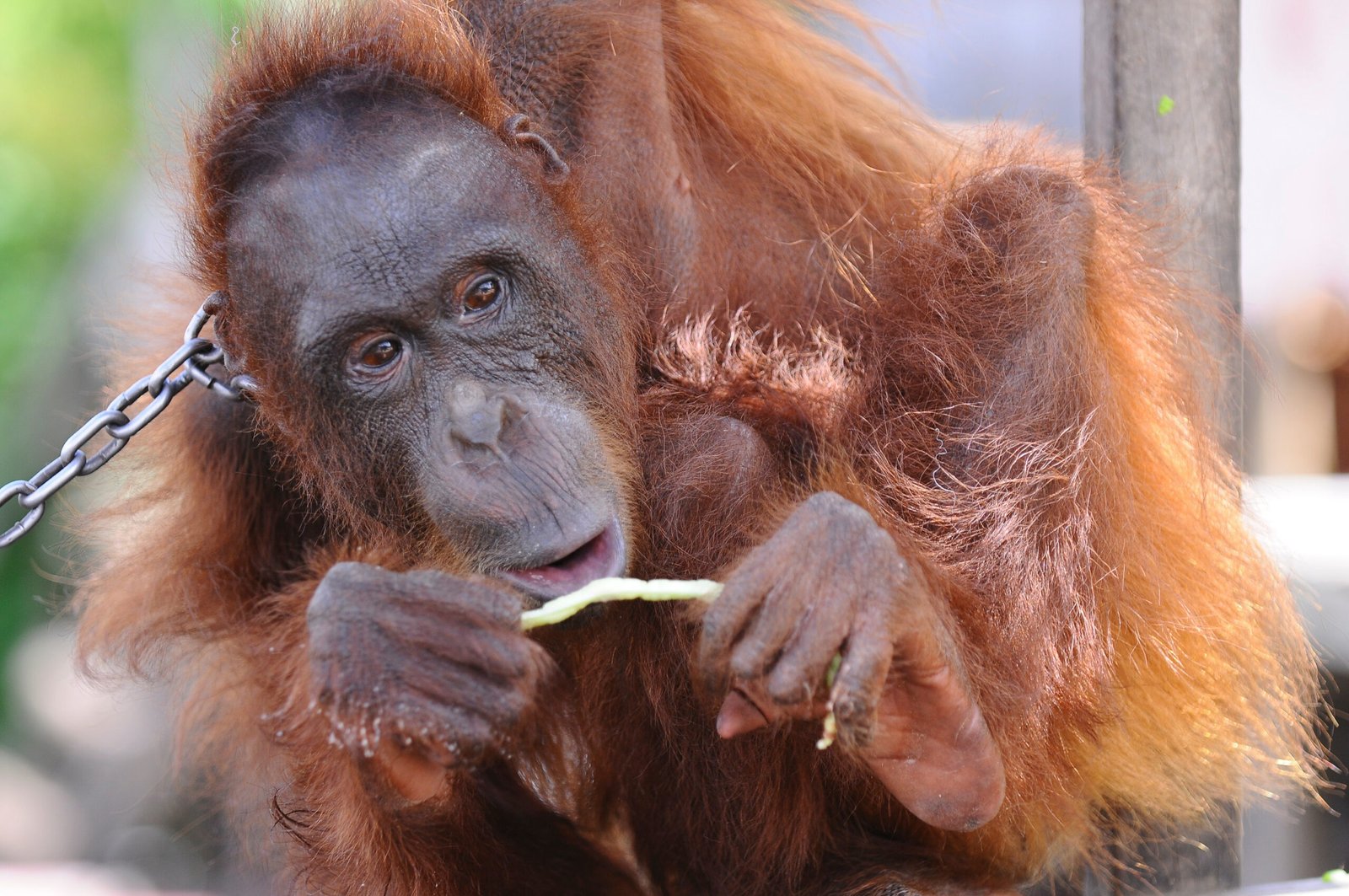
Displacement turns into direct danger.
When orangutans enter farms or plantations while searching for food, they may be chased, injured or killed. Infants can then be captured for illegal sale or private possession.
Rescue can save an individual life, but it cannot replace a functioning forest. Preventing conflict means protecting habitat, enforcing wildlife laws and working with people who live beside orangutan range.
- Infant capture follows the loss of the mother
- Orphaned young can require years of specialist care
- Prevention begins before an encounter occurs
The crisis is connected. Conservation should be too.
Effective conservation combines habitat protection, conflict prevention, law enforcement, community participation and specialist care when individual animals are in danger.
Protect and reconnect rainforest
Keeping forest standing preserves feeding grounds, nesting sites, travel routes and the larger ecosystem orangutans need.
Prevent conflict with people
Community participation, coexistence strategies and rapid response can reduce the risk of injury or removal.
Enforce wildlife protection laws
Effective enforcement is essential for reducing killing, capture, illegal possession and trade.
Provide specialist rescue and care
Injured, displaced and orphaned orangutans may need expert treatment, rehabilitation and carefully planned release.
Palm Oil & Orangutans
Oil-palm expansion connects several of the threats facing orangutans: rainforest conversion, fire, habitat fragmentation and conflict with people. Follow the supply chain and see what happens when rainforest becomes plantation.
Understand Palm Oil- Rainforest conversion
- Oil-palm expansion
- Peatland fires
- Wildlife conflict
- Certification & supply chains