A Forest Worth Keeping
Supporting conservation work in Tanjung Puting National Park is important. Visiting, donating and volunteering all help create jobs that depend on the forest remaining standing. When people can earn a living from protecting orangutans and their habitat, they are less likely to choose work that harms the forest.
The orangutans bring people here. The money from those visits travels much farther than the feeding stations.
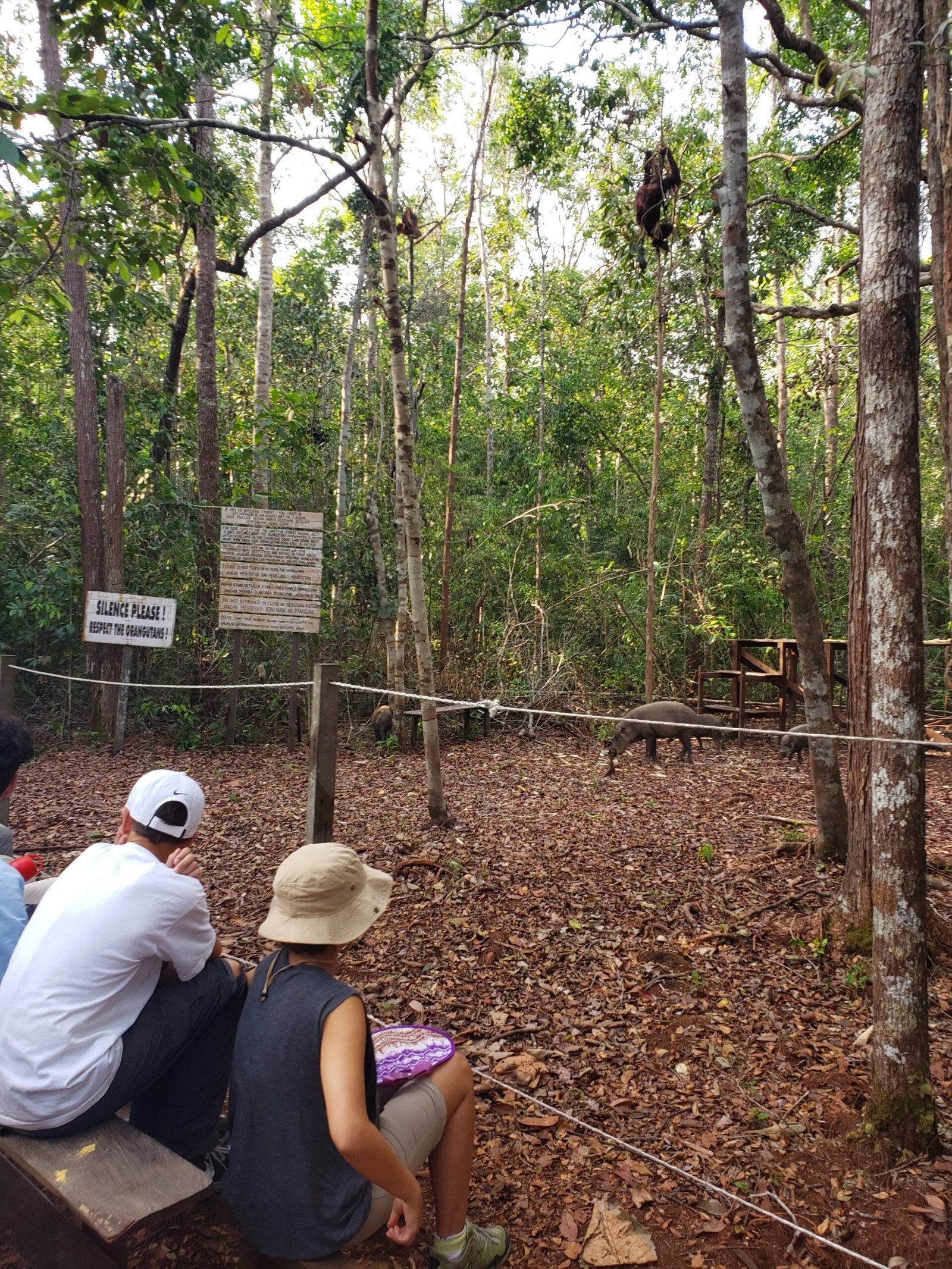
Why Feeding Platforms Exist
Feeding platforms are part of the history of orangutan rehabilitation in Tanjung Puting. They are not there just to make orangutans easier for visitors to see.
Earlier rehabilitation programs released ex-captive orangutans into the forest around Camp Leakey. Those animals were added to an area already occupied by wild orangutans, and the forest has a finite amount of food.
The Camp Leakey area is now considered to be at or near its carrying capacity, which is one reason it is no longer used as a release site. Supplementary food helps support some rehabilitated orangutans and their descendants.
They still forage naturally. When wild fruit is plentiful, some may not visit the feeding station at all. Wild orangutans may also pass through.
The Forest Has an Economy
Tourism money circulates through Pangkalan Bun and Kumai. A living park can support jobs and businesses year after year.
Where the Money Goes
- Guides, cooks, captains and klotok crews.
- Hotels, guesthouses and restaurants.
- Drivers and airport transfers.
- Food, drinking water and other supplies.
- Fuel suppliers, mechanics and boatbuilders.
- Other businesses serving visitors to the park.
What Visitors Can Do
- Hire local guides, operators and boat crews.
- Eat at restaurants in Kumai and Pangkalan Bun.
- Stay locally before or after the river trip.
- Buy food and other supplies in town.
- Tip good guides, cooks, captains and crews well.
- Spend a little more time locally if your schedule allows it.
- Donate to conservation NGOs working in and around Tanjung Puting.
Keep the Encounter Simple
Observe orangutans without trying to become part of what they are doing.
- Follow the distance set by your guide.
- Let the orangutan decide how close it wants to be.
- Never touch, feed, bait or call an orangutan.
- Do not enter orangutan habitat when you are sick.
- Keep food sealed and out of sight.
- Always leave the orangutan a clear route away.
Plan Your Visit
Want to know more about seeing orangutans in the wild? Our Tanjung Puting guide covers klotoks, feeding stations, trip planning and what to expect when you visit.
Explore the Tanjung Puting Guide- Klotoks and river travel
- Feeding stations
- Planning your itinerary
- What to bring
- What to expect