How to Get to Tanjung Puting National Park
Tanjung Puting National Park is reached through Pangkalan Bun and the port town of Kumai. From Kumai, most visitors travel upriver by klotok, a wooden riverboat used for transportation, meals and usually sleeping.
How I know the area: my parents, Biruté Galdikas and Rod Brindamour, founded Camp Leakey in 1971. I grew up around Camp Leakey and lived in the area for years as an adult.
- Typical trip
- 3–4 days
- Arrival
- Pangkalan Bun
- Boat departure
- Kumai
- Accommodation
- Boat or lodge
The Journey Upriver
Travelling by Boat
A speedboat is the faster option but for most visitors, the Klotok is the preferred choice.
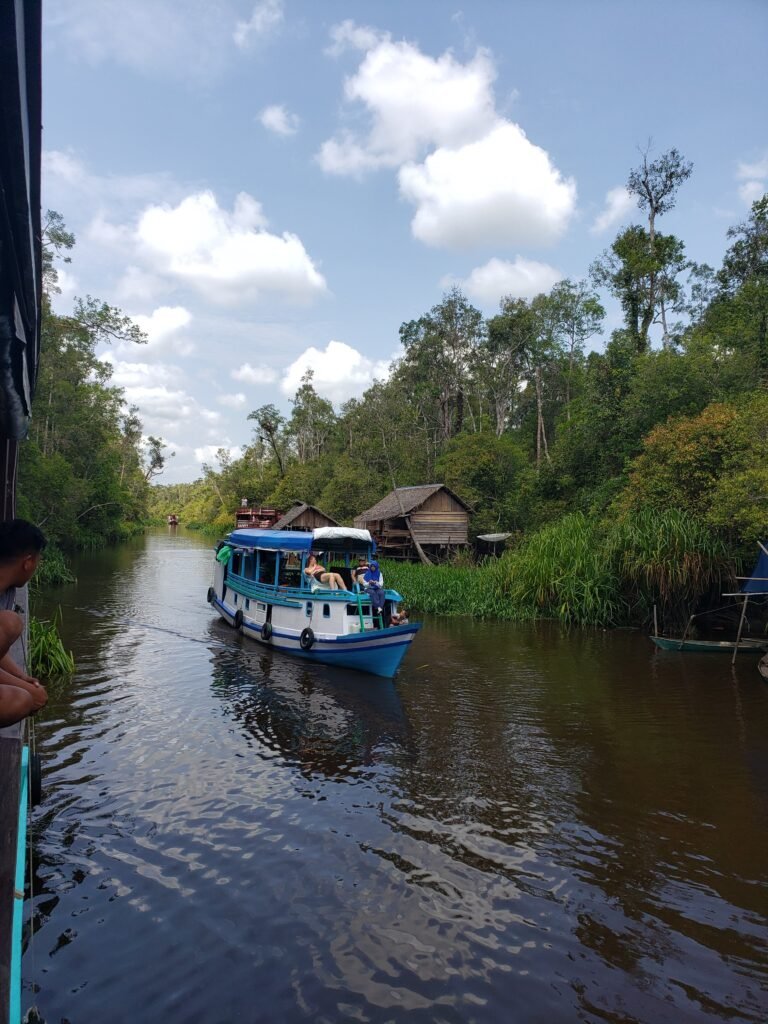
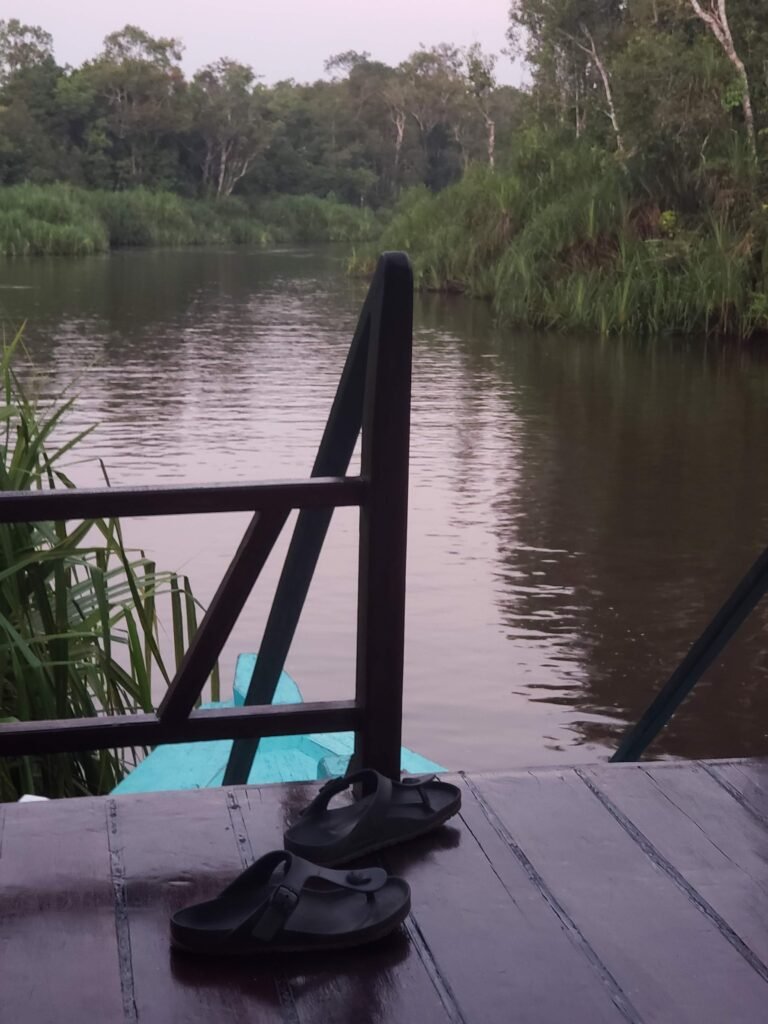
A klotok is a slow-moving vessel that allows you to watch the forest and wildlife along the river. These boats are open-sided, and the boat doubles as your accommodation.
A speedboat can make sense for a shorter itinerary or when travelling to and from a lodge. It saves time but removes much of the slow paced, relaxing river journey.
Visitors who prefer a fixed room can ask about staying at Rimba Lodge and travelling to the visitor areas by speedboat. Some itineraries may combine a lodge stay with time aboard a klotok.
- Klotok
- Best for experiencing the river as part of the trip
- Speedboat
- Useful when saving time or staying at a lodge
What You Are Paying For
Boats can follow almost the same route while offering very different levels of privacy and comfort.
| General level | Sleeping and privacy | Bathroom and cooling | Relative cost |
|---|---|---|---|
| Standard open-deck | Mattresses on the covered passenger deck, usually beneath mosquito nets. | Simple bathroom, usually cold water and natural ventilation. | Lowest |
| Private cabin | An enclosed sleeping area rather than converting the open deck each night. | Facilities vary. Fans or a private bathroom may be included. | Higher |
| Higher-end | A more substantial private cabin and conventional bed. | Some boats provide air conditioning, hot water and private bathrooms. | Much higher |
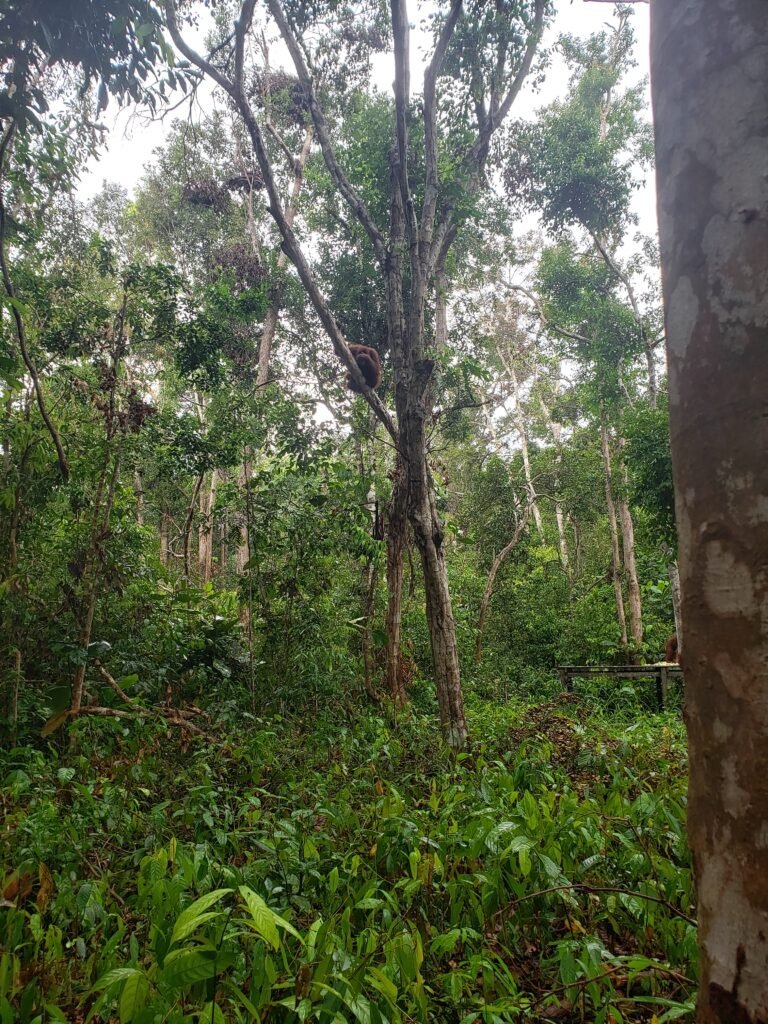
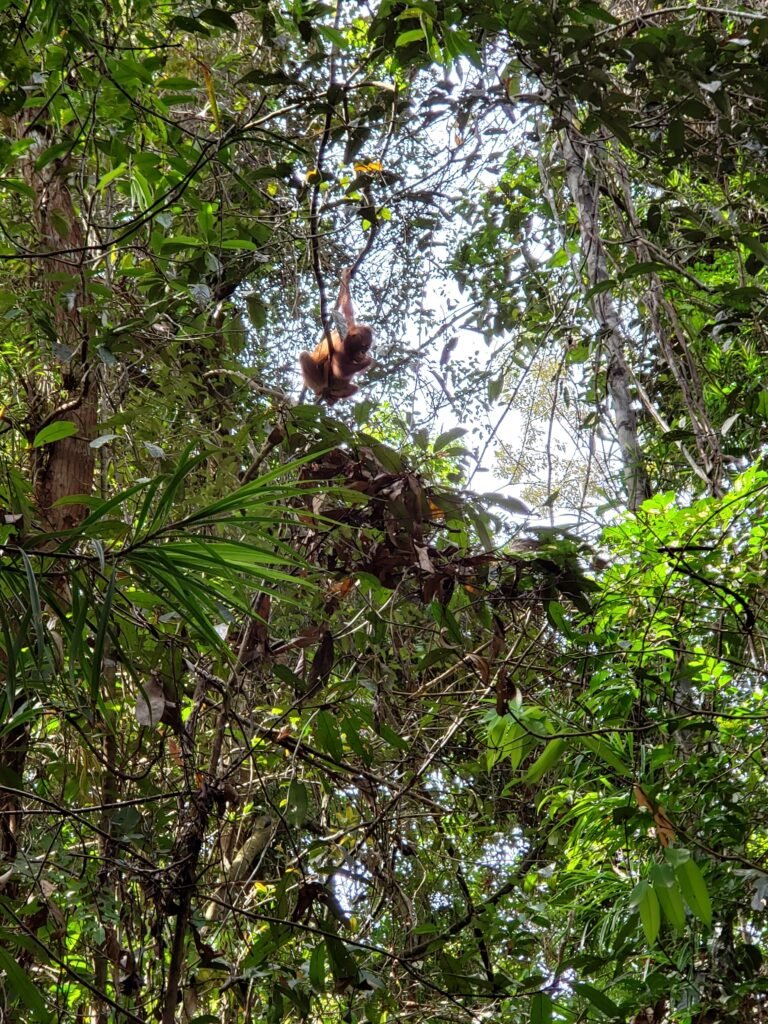
Orangutans move freely through the surrounding forest.
At the Feeding Stations
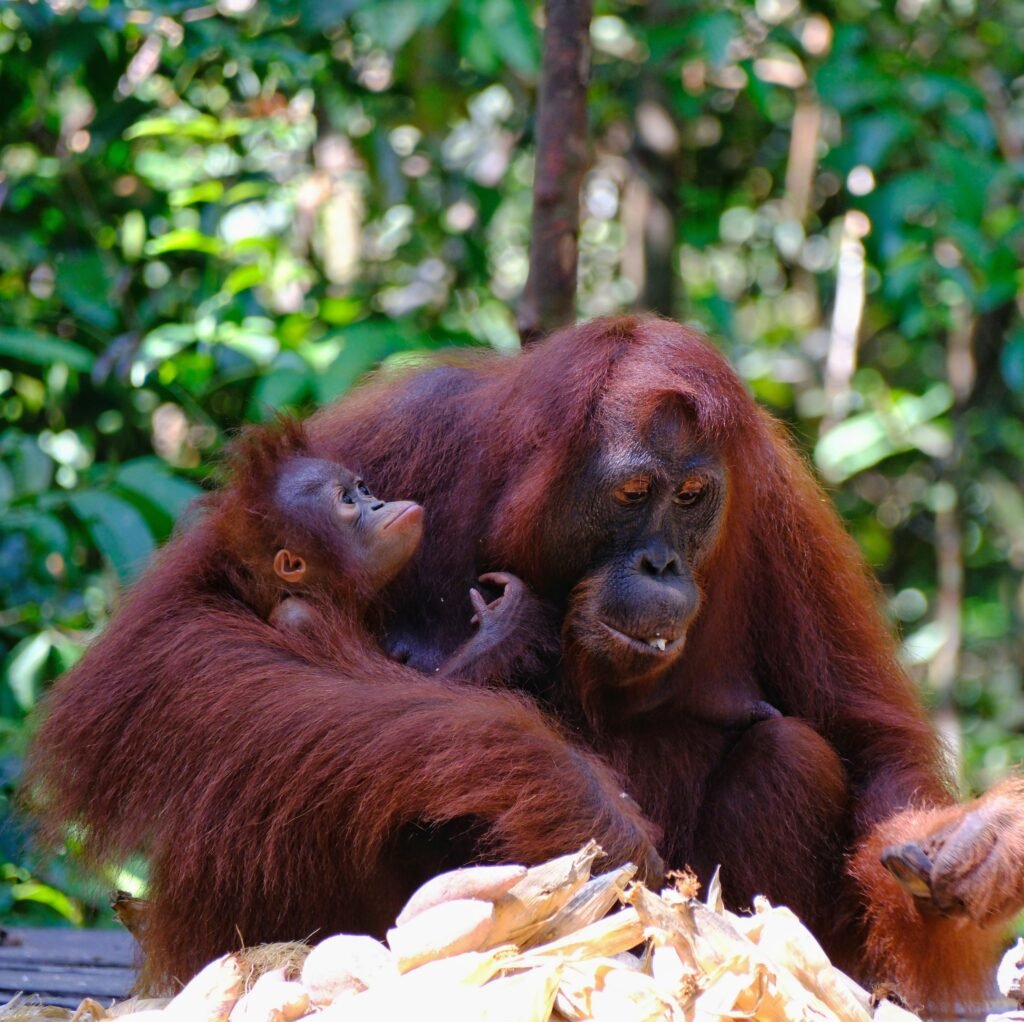
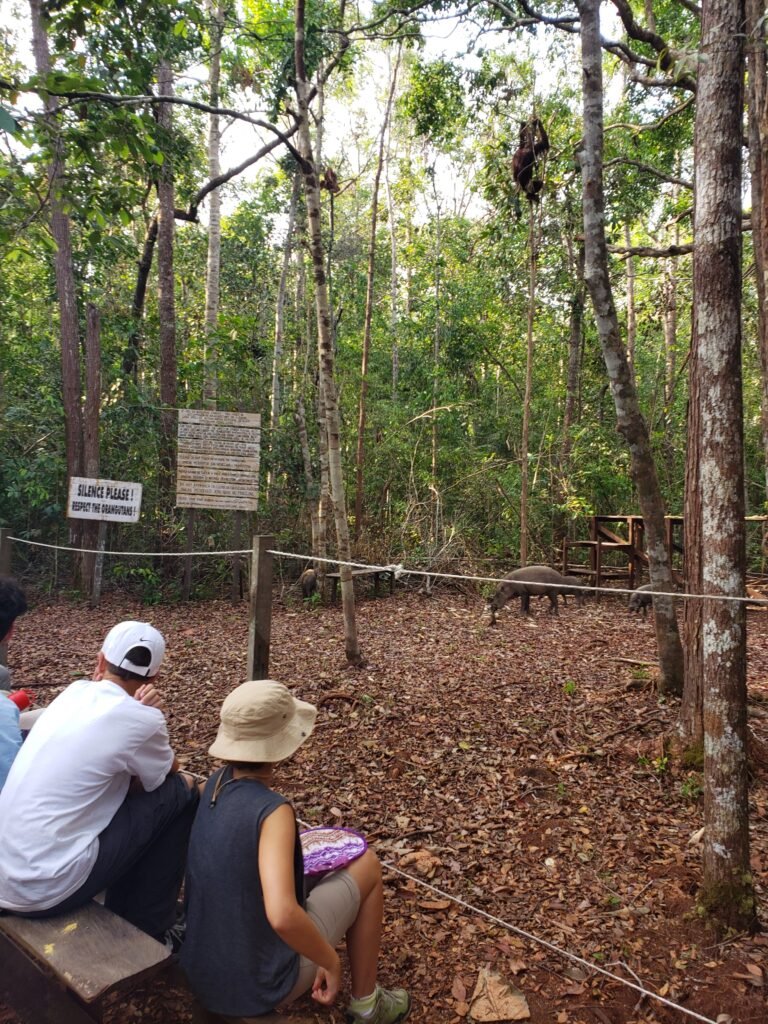
Visitors wait behind a simple boundary, with a feeding platform positioned in front of the forest.
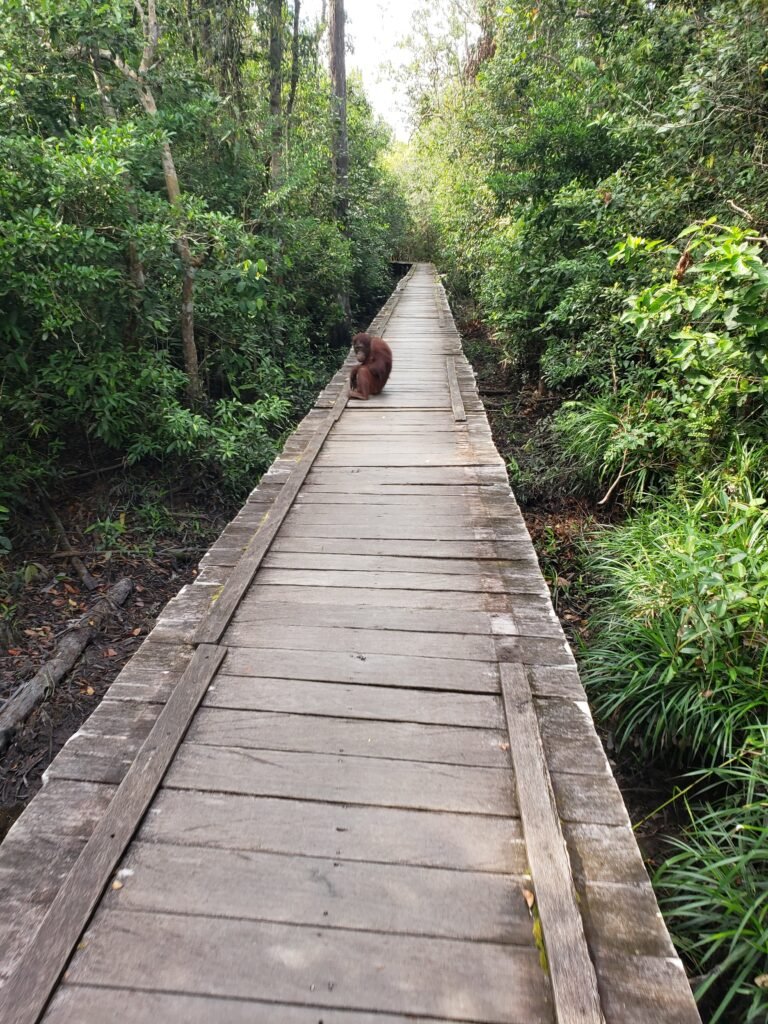
The boundary keeps people out of the feeding area. It does not contain the orangutans. They may arrive through the trees, via a trail or pass close to the viewing area.
Some orangutans are fully wild, while others have been rehabilitated and are more accustomed to people. In both cases, visitors should give them plenty of space and allow them to move freely through the area.
Why do feeding platforms exist at all? →
- Remain behind the visitor boundary
- Keep food sealed and out of sight
Wildlife in Tanjung Puting
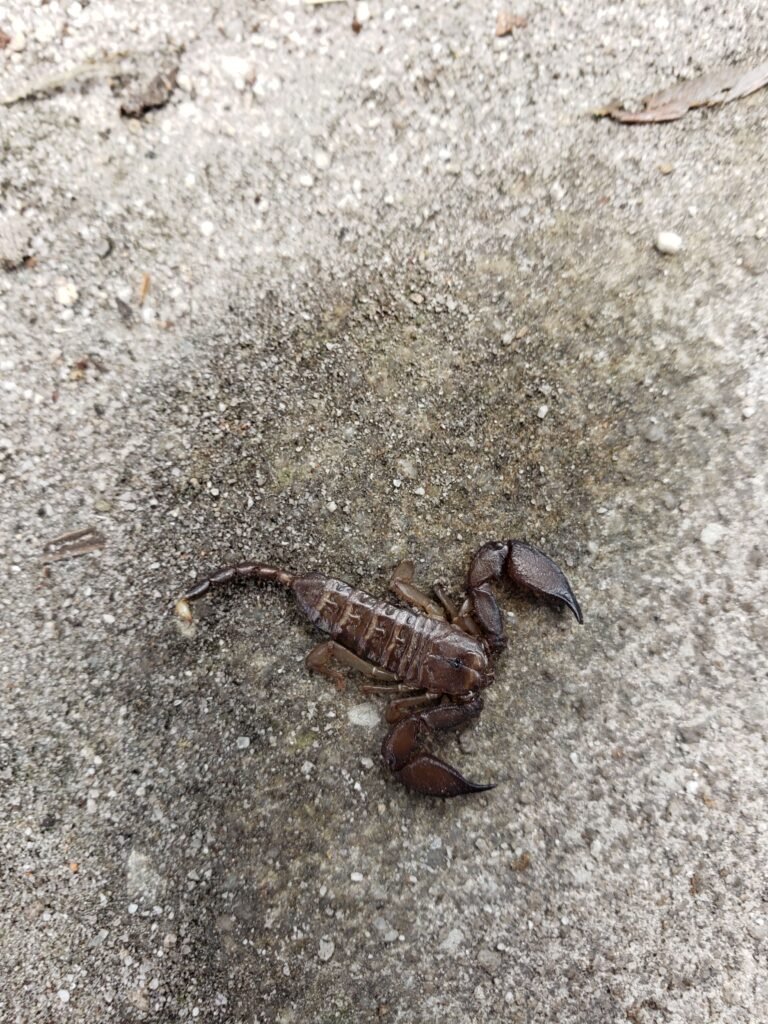
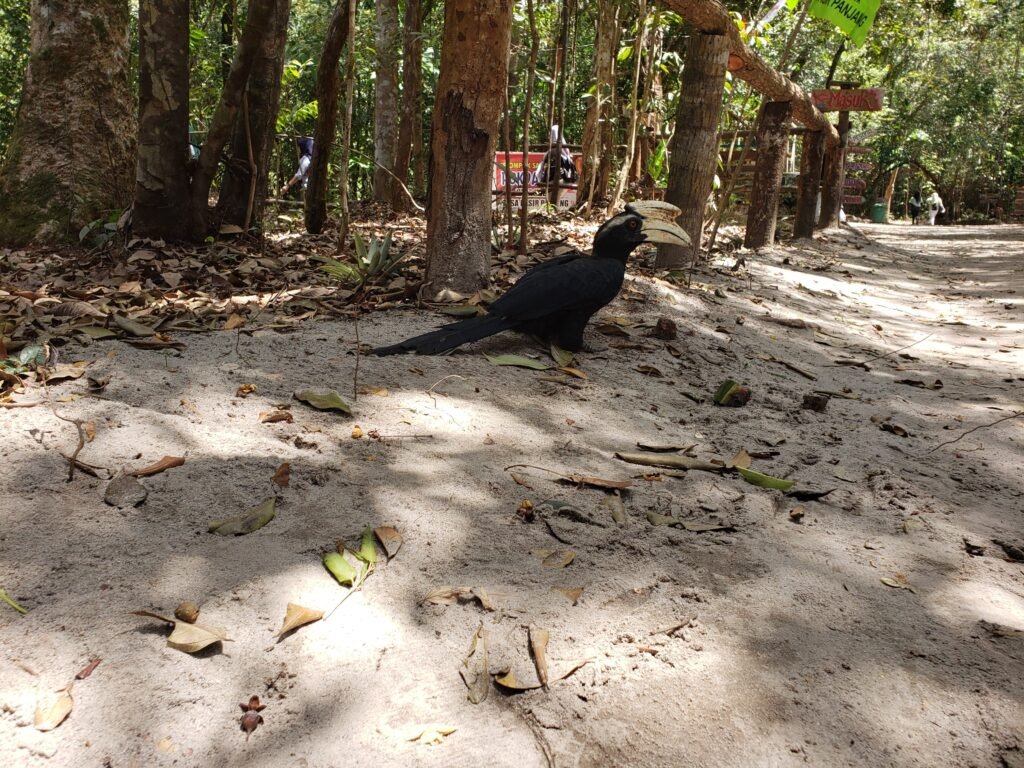
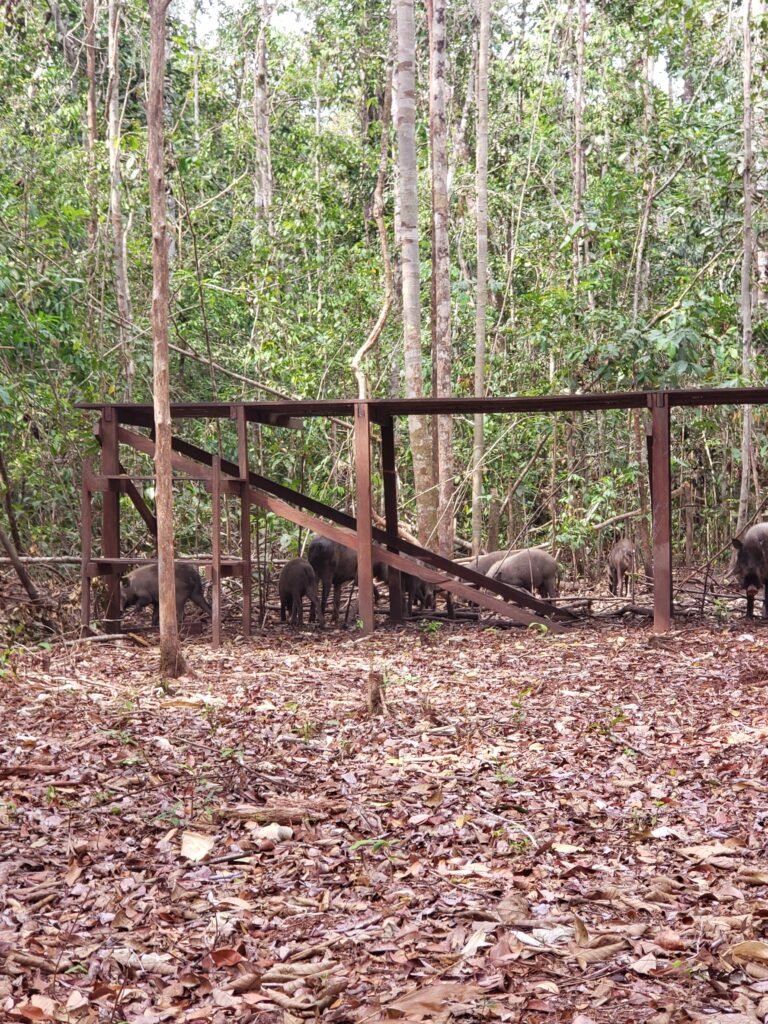
Much of the wildlife watching is done from the open upper deck of a klotok, while walks and feeding-station visits offer opportunities to see species away from the river.
Sleeping on the Sekonyer River
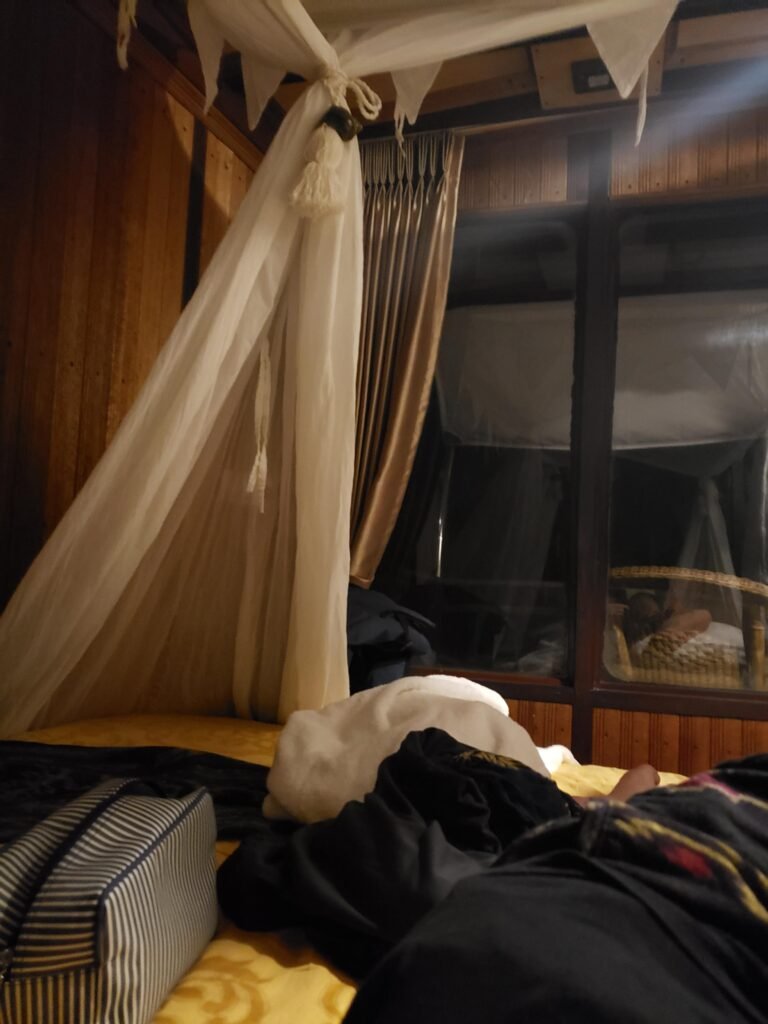
A basic klotok is closer to camping than staying in a hotel.
Mattresses are laid on the covered upper deck beneath mosquito nets. The sides remain open for airflow, while curtains or tarps may be lowered during rain and at night.
Meals are normally Indonesian and prepared onboard. Expect rice, noodles, vegetables, fruit and simple cooked dishes. Quality varies by operator.
- Confirm where you will sleep
- Confirm the bathroom arrangement
- Ask how and when charging is available
- Confirm which meals and drinks are included
Before You Book
- Arrival
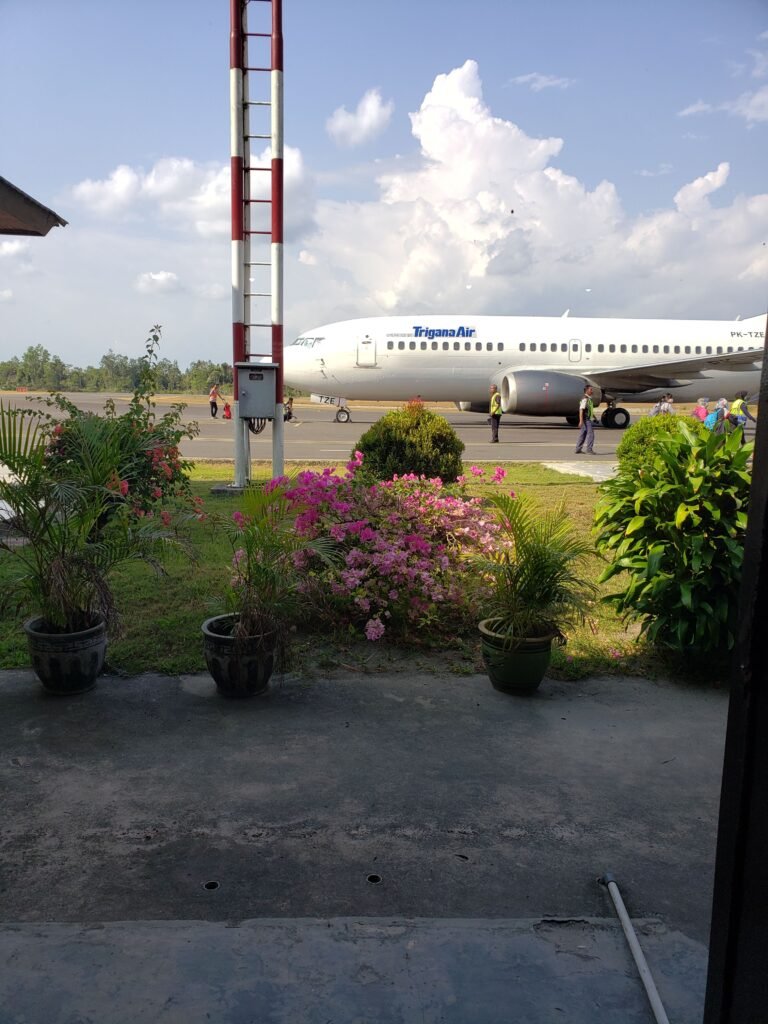
- Kumai is a short drive from Iskandar Airport. Confirm whether pickup and the transfer are included. Allow 30 minutes for travel and to load and unload your luggage.
- When to go
- June to August is the main visitor season, with generally drier conditions and reliable orangutan sightings. July and August can be crowded. Boats may be booked months in advance. The dry months also carry a greater risk of forest fires and haze.
- Connectivity
- Mobile reception usually drops out around Tanjung Harapan. Starlink access has improved connectivity, but I would not rely on having service inside Tanjung Puting National Park.
- Charging
- Devices are usually charged by a generator on board the klotok. Ask how devices are charged and when electricity is normally available onboard.
- Children and mobility
- Boarding in Kumai may involve stepping across one or more klotoks. Guides and crew will usually carry young children and assist older passengers, but some balance and mobility are still required.
- Rain and insects
- Bring light rain protection and effective insect repellent. The CDC lists rural Kalimantan as a malaria-transmission area and recommends preventive malaria medication for travellers.
- Price and inclusions
- Get the total quotation in writing and confirm meals, transfers, park arrangements and additional fees.
- Guide
- Ask about the guide for Tanjung Puting. A good guide will know the life histories of the orangutans and be knowledgeable about the local ecosystem. Most will speak at least conversational English. Many guides now also speak Spanish, reflecting the large number of Spanish-speaking visitors to the area.
- Park entry
- Tour companies will usually arrange the required park tickets for you, but confirm they are included in your booking.
- Alcohol
- Alcohol may be available, but the area is dry and it is illegal. Raids have been known to happen to sellers although this is rare. Beer will be more expensive than in other parts of Indonesia.
Current Haze Around Tanjung Puting
Dry-season haze can affect visibility and air quality around Tanjung Puting. This map shows current fire detections, with NASA satellite haze available as an optional layer.
Loading current satellite data…
Haze: NASA GIBS · MODIS Terra + Aqua MAIAC aerosol optical depth. Fires: NASA FIRMS · VIIRS NOAA-21. Higher aerosol values can include wildfire smoke, but also dust and pollution.
Tanjung Puting FAQ
A few questions visitors often have about wildlife and close encounters in Tanjung Puting.
In the forest
I’m afraid of spiders and other bugs. Will I see any?
You might. Tanjung Puting is a tropical rainforest, so spiders and insects are part of the environment. Guides and boat crews know that many visitors from non-tropical countries aren’t used to insects, and your klotok will be kept clear of them.
After living in and around Tanjung Puting for several years, I only saw large spiders occasionally, even though I went into the forest almost every day. They are even less common in town.
You may also occasionally come across centipedes, scorpions or fire ants in the forest. Most encounters are more unpleasant than dangerous. Leave them alone. Your guide will be familiar with them and warn you to stay away.
Are there venomous snakes in Tanjung Puting?
Yes. Borneo has venomous snakes as well as many harmless species, but encounters on the normal visitor routes are uncommon.
In the years I lived in the area, I only heard of one person being bitten, and that happened in the village rather than in the park.
Cobras, kraits and pit vipers are found in Borneo, so don’t approach or handle a snake. Your guide will usually spot one before you do.
Are there crocodiles in the river?
Yes. Crocodiles live in the rivers around Tanjung Puting, but the risk to visitors is very small.
Swimming was my favourite thing to do there. As a kid, and later as an adult, I swam in the river at Camp Leakey every day, sometimes for hours. It was also where we bathed, regularly twice a day. In the years I spent in the area, I know of two people who were killed by crocodiles.
I wouldn’t recommend swimming in the river today because of this, but crocodiles are not something you need to worry about while travelling by klotok. Local people still use parts of the river for bathing, and klotoks usually have a bathing area on board.
At night, the crew may scan the river with a large spotlight. Crocodiles are often noticed by their eyeshine. Without that reflection, a crocodile in the water can look remarkably like a log.
How hot and humid does it actually feel?
It is hot and humid year-round, but usually not unbearably so. The humidity is what most visitors notice first, especially when walking in the forest where there is little or no shade. On the river, the breeze from the moving klotok can make it much more comfortable.
Shorts are cooler, but long pants give you better protection from insects and leeches. Pull your socks over your pant legs to help keep leeches out. If you wear shorts, use insect repellent.
Either way, it can get hot. Drink plenty of water and use sunscreen, especially when you’re out from under the tree cover.
About the orangutans
Are the orangutans wild?
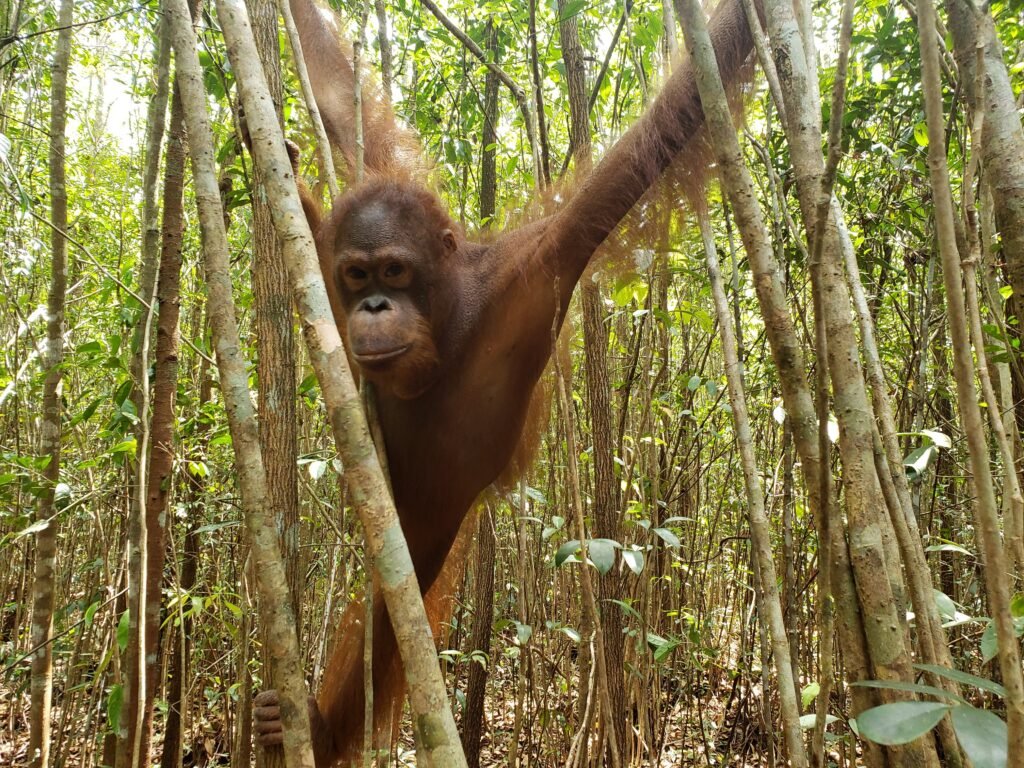
Some are. Tanjung Puting has completely wild orangutans as well as rehabilitated orangutans that were released back into the forest years ago, along with their offspring. Around Camp Leakey and the feeding stations, you are more likely to see rehabilitated orangutans and animals that are accustomed to people.
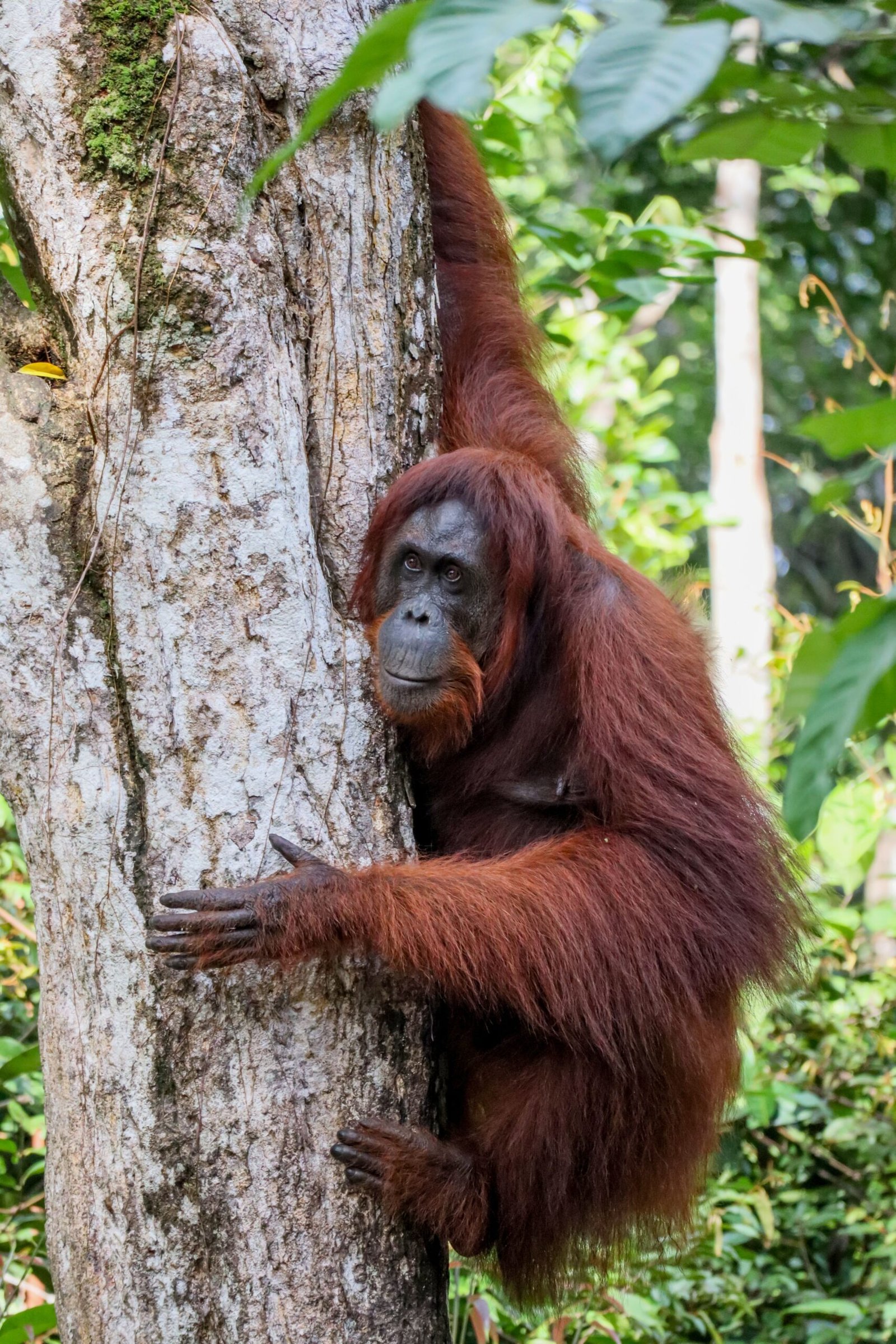
The orangutans move freely through the forest and decide whether to come to the feeding stations.
What happens if an orangutan comes close to me?
Orangutans that are comfortable approaching people at Camp Leakey are usually rehabilitated ex-captives or their descendants. If one approaches you, don’t move closer or try to touch it. Let the orangutan decide where it wants to go.
Your guide will usually stay nearby and help if necessary.
Are orangutan sightings guaranteed?
No wildlife sighting can ever be guaranteed. The orangutans are free to come and go as they please. During periods when fruit is abundant in the forest, some may not come to the feeding stations at all.
In practice, though, it is very unusual to visit the main feeding stations and not see orangutans.
Is seeing orangutans in Tanjung Puting ethical?
Yes, if it is done responsibly. Many of the orangutans at the feeding stations are rehabilitated ex-captives or their descendants. They are free to come and go, although visitors should still give them space and never touch or feed them.
Tanjung Puting was protected long before it became a tourist destination. That conservation allowed much of the forest to survive while large areas around it were logged or converted. Today, tourism gives local people another economic reason to keep that forest standing.
Planning a visit?
Learn how to visit orangutans ethically →
At dawn, mist hangs over the river while cicadas and gibbons fill the forest with sound. Somewhere beyond the trees, a male orangutan’s long call carries through the canopy.
Tourism and Conservation
Protecting Tanjung Puting also affects the communities around it. Tourism brings money into Pangkalan Bun, Kumai and the communities along the river, supporting guides, captains, cooks, drivers, hotels, restaurants and other local businesses.
Around 79,000 people visited Tanjung Puting National Park in 2024. That’s a lot of people for a remote site in the middle of Kalimantan. For context, Kumai itself has a population of around 21,000. Those visitors create work that depends on Tanjung Puting remaining forest. They also give the forest an economic value beyond logging, mining or conversion to other land uses.
Visit Orangutans Ethically