Akmad
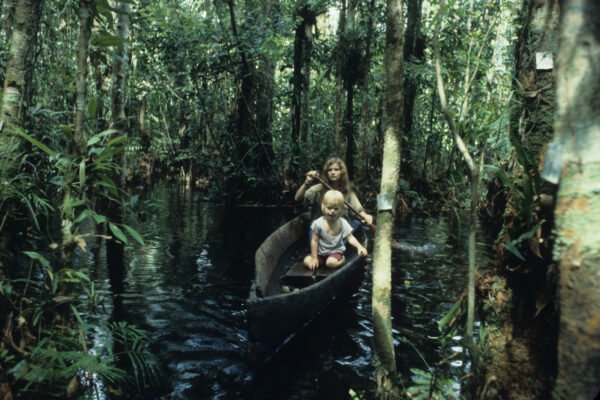
In 1971, Biruté Galdikas and I embarked on a project, funded primarily by the National Geographic Society and the Louis Leakey Foundation, to study wild orangutans in Borneo. We chose Tanjung Puting Nature Reserve as the study area for the project. Our camp was located in the forest along the Sekonyer River. The nearest town was Kumai, on the south coast of central Borneo, which is the starting point for the boat trip to the reserve.
Shortly after beginning the study, we encountered orangutans being raised in cages by people living near the nature reserve. It was obvious to us that the illegal pet trade was a major threat to the orangutan population. Young orangutans were often orphaned when their mothers were killed so the infants could be captured and sold as pets. At the same time, logging and clearing for rice fields displaced orangutans from the forest and forced them to raid gardens for food. Farmers protecting their crops often killed the females, leaving an orphan youngster.
So we embarked upon a program of confiscating pet orangutans with the intention of returning them to the forest. This would give these orphans the life they deserved and hopefully help stop the killings.
That soon proved to be harder than we imagined. Not because of the difficulty of recovering or caring for these young orangutans, but because of the challenge of helping them adapt to life in the forest.
The local forestry staff helped find the orphans and arrange transport to our facilities at Camp Leakey. They often talked to owners and persuaded them that life in the forest would be better for their pets. Occasionally, they also confiscated orangutans destined for the pet trade and gave them to us. Within a few weeks, we were caring for three young orangutans.
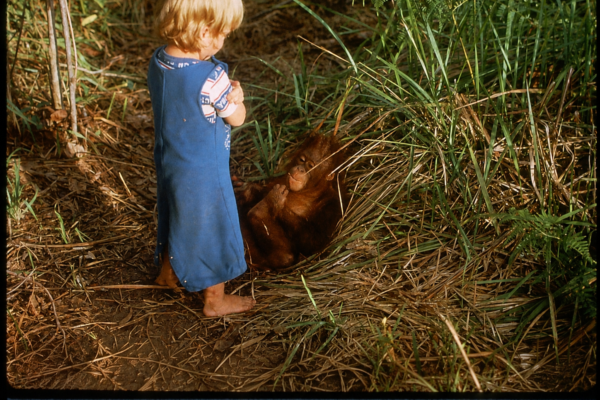
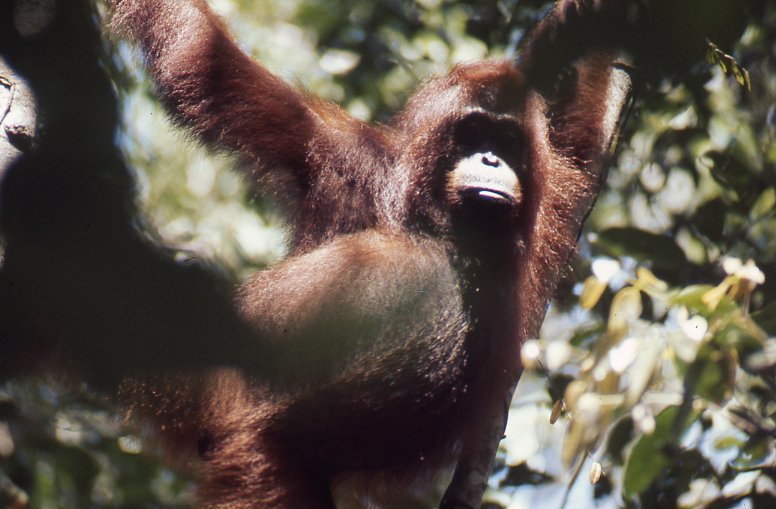
Akmad, who came to us from a family in Kumai, became one of the young orangutans that helped us define our approach to rehabilitating orangutans. She was a gentle adolescent. To this day, she is the only orangutan I have known that would gently place a cup back down after drinking. Others just drop the cup when done. Because she was older than the other two and had only been in captivity a short time, she was a good candidate for a quick re-introduction to the forest.
Preparing young orangutans to return to the forest turned out to be much harder than we expected. Imagine the challenge of trying to teach a different species to live in a forest that we barely understood. No manual or blueprint was available to us deep in Tanjung Puting, so how could we teach her to utilize the 350 different plant species that orangutans can eat? I’ve tried some of the fruits and leaves they eat myself, and I cannot recommend them.
Early on, she eagerly climbed trees when we took her into the forest. We started by taking her to fruiting trees that we had seen wild orangutans feeding on in recent days. We felt really encouraged when she climbed into the canopy to try the fruit. It seemed like she was starting to learn what she could eat.
Over the coming months, we transitioned from us carrying her into the forest to letting her explore on her own. She spent most of her time there and less time around camp.
Then, to our delight, instead of sleeping in her favorite old sack on the floor of our hut, she built a nest in a tree in the forest and slept in it. Fortunately, all three of these first ex-captives knew how to build a nest. They would often climb trees near camp and begin breaking branches and folding them to create play nests.
I was relieved that young ones were able to make their own nests. I tried many times to replicate their nest-making, and I failed miserably. I was never able to make one strong enough or level enough for any kind of use. If I had been forced to spend a night in the forest, I would not have been sleeping peacefully on a soft, flexible platform. I’d have spent a sleepless night in a tree, holding onto a branch.
From this modest beginning, she spent more and more time, both days and nights, in the forest. When she began spending several days away from camp, we finally felt we had successfully returned one orangutan to the forest.
Soon, Akmad was living in the forest. She would still return to camp from time to time, but she had made the forest her home. For the first time, we knew that what we were trying to do might actually work.
Applying what we had learned was still not easy. Akmad was older than the other two and had spent less time in a cage and less time away from the forest. Over the coming years, we seldom received a new ward that was as forest ready as Akmad.
Sugito, a 3-4 year old male, and Subiarso, a 3 year old female, arrived just before Akmad. They had both been in cages much longer than Akmad and therefore been away from the forest longer. We were determined to help them become complete orangutans too. Subiarso took years to mature to the point where she would spend significant time in the forest. Sugito was more of a challenge. He was determined to remain a red human in camp long after he reached the age that young males in the wild would set out on their own.
It became clear that time spent in the forest mattered to becoming a wild orangutan again.
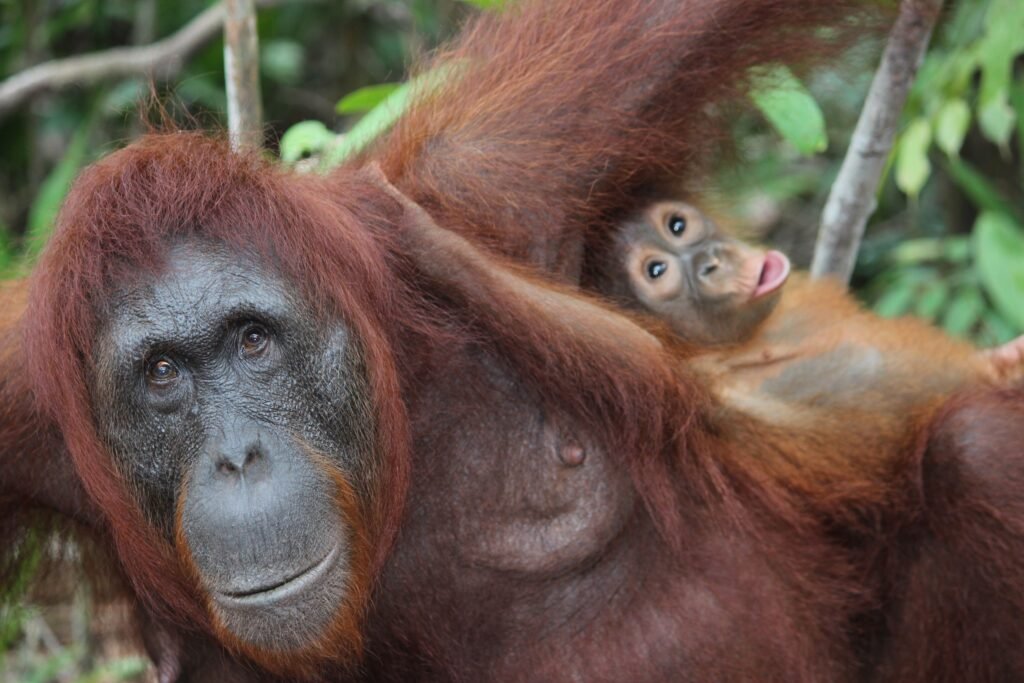
Through our study of wild orangutans, we discovered that young ones spend the first 6-7 years with their mothers learning nest building and forest navigation. It takes years for them to learn all of the possible foods that orangutans can eat. Unlike temperate forests, tropical forests have unpredictable seasons. A tree species may not fruit for 2-3 years, and even when it does, not every tree of that species will bear fruit in the same season. So it was going to take years for a youngster to learn a complete menu.
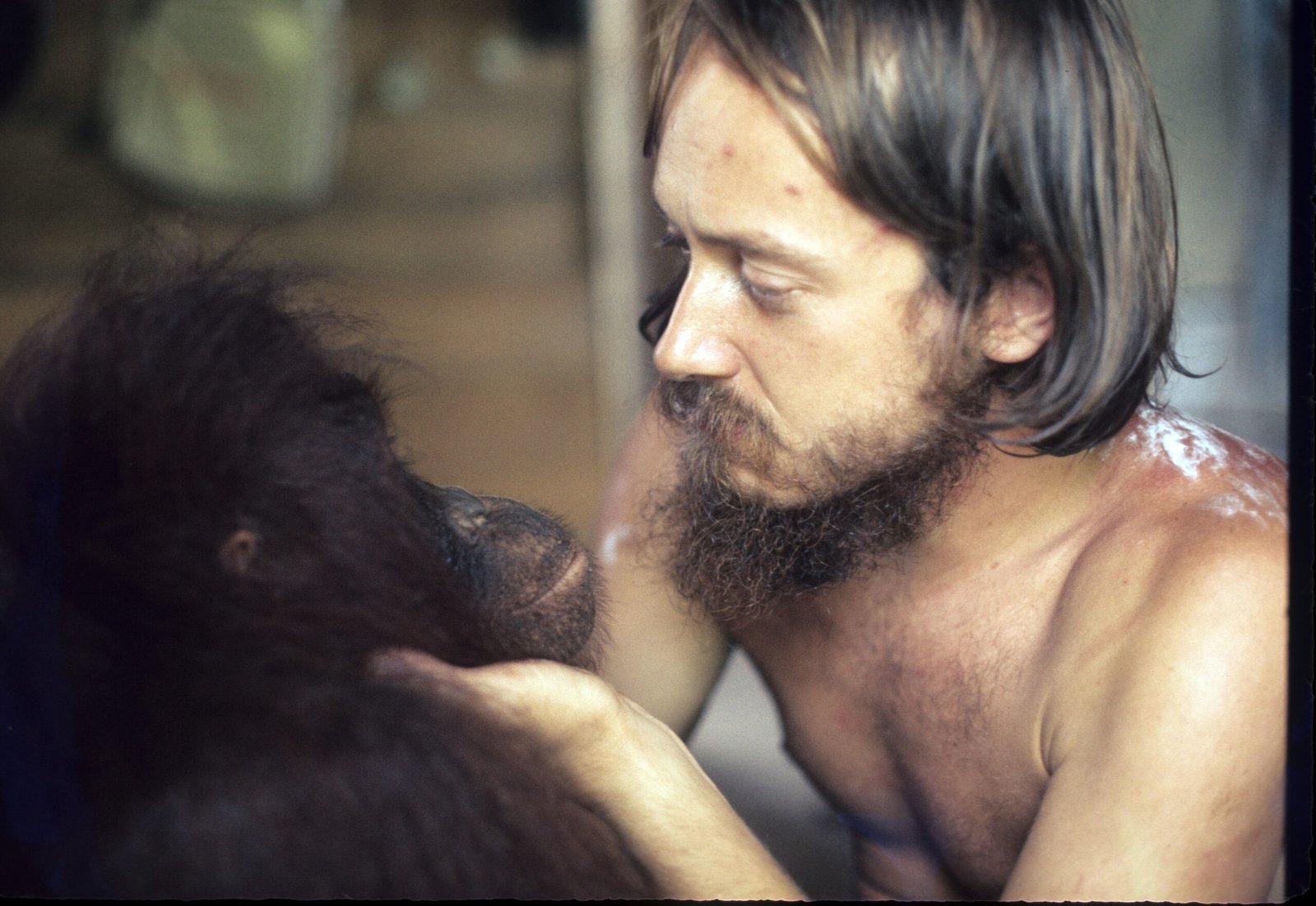
When Akmad returned to camp, the younger ones would often join her in the forest to play and learn from her. We also occasionally carried one of the young ones into the forest while we observed wild females and their offspring. It became obvious that orangutans need significant time with good tutors to learn how to survive in the forest. So, in addition to the research, we committed to spending whatever time was needed to take the place of each individual’s missing mother.
Every success was like watching a son or daughter graduate and head out into the world.