The Gold Miners Up the Sekonyer River
At the time, I was coordinating a group of volunteers working in and around Camp Leakey. The job involved organizing supplies, arranging transportation, keeping snakes out of the team house and trying to keep everyone motivated and moving in the same direction. Most of the time, it was practical work, like painting the herbarium or helping to construct an information centre.
Then there were days like this one.
We had been told there was an illegal gold-mining operation farther up the river and that it needed to be cleared out. We knew there were miners there, but that was about it.
We took a few police officers with us. They had the authority to evict the miners, and we were there to help clean up the site. We also took a small group of volunteers with us—two or three, and the group included a few outside students.
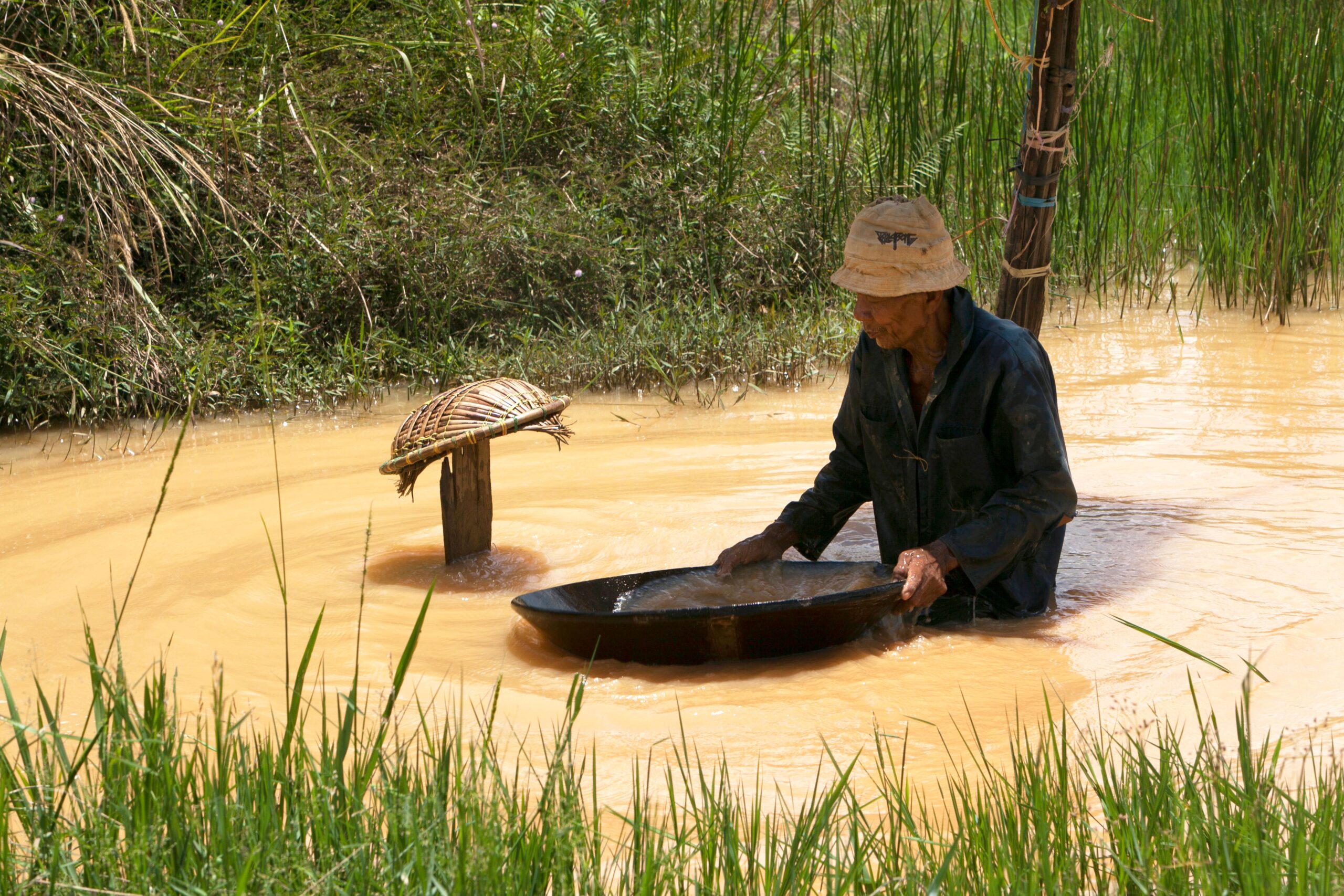
At first, the operation we came across was small. There were a few rough huts, trash scattered everywhere and a small group of people mining for gold. One woman looked to be in her forties. The rest were middle-aged men.
It was more or less what we had expected. They appeared to be a family or a small group of local people taking advantage of the lack of law enforcement to make some extra money. It did not look well funded or organized. But when you cannot find other work, even risky, low paying work can be better than none.
They were probably pretty amused by what was going on. A group of foreigners had arrived with police officers and were now cleaning up the trash around their illegal gold-mining operation. We did not speak much to them. They mostly stood there watching us work, probably wondering why we had come from another country to do this. Soon we finished our work and had moved on and whatever became of them, I never saw.
Only a few metres away, hidden by the bushes, was something completely different. We did not see it until we were close to the edge.
The pit was enormous, a hole in the earth stripped down to raw clay and mud. I remember the edge of it more than anything. That instinctive oh my god feeling before my brain caught up. It had the kind of scale you imagine the Grand Canyon having before you actually see it. It seemed completely out of place in what should have been forest inside a national park.
There were large hoses, heavy machinery and an enormous amount of earth that had already been removed. This was not a few people trying to find a little gold beside the river.
This was an operation.
The shovels we had brought with us, suddenly felt small and insignificant. We all understood we were not going to be filling in that pit in anytime soon.
Then the police began rounding up the miners. One of the miners was not happy and began to argue. The situation had grown a bit tense. It was the kind of arguing you’d expect when the police show up and start telling you your operation is over, even an illegal one.
At some point, several of us walked back toward the boat to get more supplies.
Then we heard a gunshot.
I looked over at one of the assistants.
“Maybe they’re shooting the miners,” he joked.
Two more shots. The joking stopped.
I ran towards the sounds. Sephon, one of the assistants yelled at another assistant to give him a shovel. I did not need to ask what he planned to do with it, it seemed fairly obvious. He was holding it with the conviction of a man ready to use it. Sephon ran toward the sounds alongside me, which had come from less than fifty metres away, somewhere behind the bushes.
Almost immediately, we came across one of the miners.
He did not seem worried at all. His calm demeanour relaxed us.
A short distance on, we found two of the police officers standing near the mining equipment with their guns out.
The police officers had been firing at their machinery with their guns.
Nobody had been shot. The miners were not attacking us. Sephon finally relaxed and put down his shovel. Apparently the miners were not working fast enough for the police officers liking.
The situation had been tense for a few minutes, but that soon too faded. One of the students working with us was wearing nothing but his underwear. It was extremely hot, the ground was muddy, so at some point he had apparently decided that pants and a t-shirt were no longer necessary. I told him to put his clothes back on. He didn’t. The sight of him in his tighty-whities, barking instructions at the miners, while fully dressed, armed police officers stood nearby, made the day feel even more surreal.
There were a few other moments like that during my time there – some funny and some much less so – but this one sticks out to me.
What stayed with me was the scale of the mine. We had just expected a small group of miners and a site we could clean up. Instead, we found heavy machinery, large hoses and a pit so vast that our shovels seemed insignificant beside it.
It gave me a new perspective. Illegal mining was not just a few unorganized people trying to make some extra money to get by. The real danger, and the biggest impact seemed to be hidden only a few metres away, operating on an entirely different scale and with a much bigger budget.
You could remove the miners. You could damage the machinery. You could clean up some of the trash.
But you could not undo that damage with a few shovels.